
TL;DR
Sint Maarten boat storage options range from wet slips in protected lagoon marinas ($14 to $32 per foot monthly) to dry stack and hurricane-rated yard storage ($28 to $65 per foot monthly during hurricane season). The Simpson Bay Lagoon and Oyster Pond marinas remain the strongest year-round options, while IGY Simpson Bay and Bobby’s Marina offer the most reliable hurricane-storage protocols. Owners storing 6+ months annually should plan for $5,200 to $18,500 in annual mooring or storage spend depending on vessel size, plus insurance riders specific to the island’s hurricane zone classification.
Table of Contents
- Why Sint Maarten Is a Top Caribbean Storage Hub
- Wet Slip Mooring Options
- Dry Stack and Yard Storage
- Hurricane Season Storage Protocols
- Pricing Across Storage Types
- Insurance, Documentation, and Customs
- Combining Property Ownership with Boat Storage
Why Sint Maarten Is a Top Caribbean Storage Hub
Sint Maarten serves as the unofficial yachting capital of the eastern Caribbean. The island offers something rare in the region: deep-draft marina infrastructure, full marine services, a protected inland lagoon, duty-free yacht parts, and direct flight access from major US, Canadian, and European cities through Princess Juliana International Airport.
Owners base vessels in Sint Maarten for several reasons:
- Year-round services. Roughly 40 marine service businesses operate on the island, covering engines, sails, rigging, fiberglass, electronics, and refit work.
- Duty-free parts. Most marine parts enter duty-free, which delivers 8 to 22 percent savings over US prices on common consumables.
- Hurricane positioning. While Sint Maarten sits in the hurricane belt, well-protected storage options inside the lagoon offer better survivability than open anchorages elsewhere in the eastern Caribbean.
- Charter access. Owners running 6 to 12 weeks of charter per year find established charter management companies on the island.
- Cruising start point. The island opens easy access to the Leewards (Anguilla, St. Barts, Saba, St. Kitts) and the Windwards beyond.
Resident vessel population has grown roughly 12 percent over the past 5 years, with strong demand from US and Canadian owners storing vessels between cruising seasons.
Wet Slip Mooring Options
The island offers four main wet-slip storage zones, each with different strengths:
Simpson Bay Lagoon
The largest protected lagoon in the Caribbean, accessible through the Simpson Bay Bridge (Dutch side) and Sandy Ground Bridge (French side). Bridge openings happen on published schedules. The lagoon hosts:
- IGY Simpson Bay Marina. 120+ slips, full hurricane protocols, premium services.
- Bobby’s Marina. Long-established, full-service, popular with mid-size cruising vessels.
- Lagoonies Bistro and Marina. Smaller, more casual, popular with liveaboards.
- Palapa Marina. Megayacht-focused with deep-draft slips.
- Port de Plaisance. 100+ slips, integrated with Yacht Club Port de Plaisance.
Oyster Pond (Captain Oliver’s Marina)
160+ slips on the eastern coast, IGY-managed, more protected from Caribbean Sea swell but smaller community of marine services. Popular with owners prioritizing quiet over downtown energy.
Marigot Bay (French side)
Open-water mooring and small marina capacity. Better suited to short-term visiting yachts than long-term storage.
Anse Marcel
A few dozen protected slips on the northern coast at Radisson Anse Marcel. Premium location, limited services.
For owners considering combining vessel storage with property ownership, the vacation rentals and buy sections cover real estate options inside walking distance of major marinas.
Dry Stack and Yard Storage
For vessels under 35 feet, dry stack storage offers cost savings, longer hull life, and stronger hurricane survivability:
- Geminga Marina and similar dry stack operations offer racked storage for boats up to 32 feet, launched on demand by forklift.
- Bobby’s Yard and Time Out Boat Yard offer hauled and propped storage for vessels up to 80+ feet, used heavily during hurricane season.
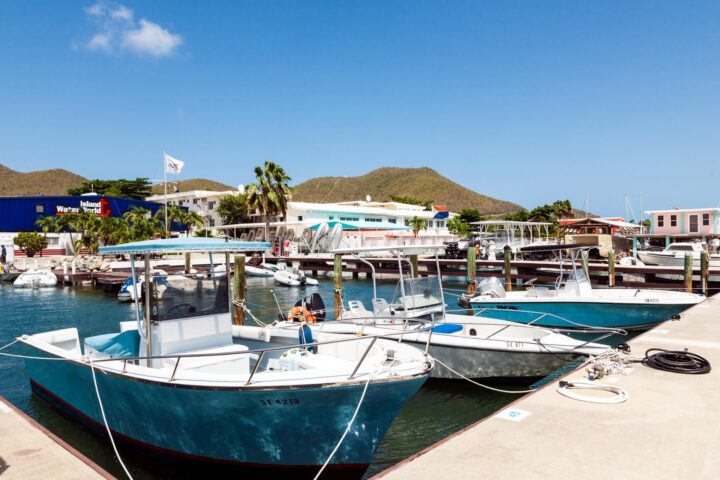
- Island Water World yard facilities offer hauled storage with on-site chandlery access.
Dry storage typically reduces marine growth, eliminates the need for bottom paint refresh between launches, and provides much stronger hurricane protection than wet slip storage. The tradeoff is launch scheduling and limited spontaneous use.
Hurricane Season Storage Protocols
Sint Maarten sits inside the active Atlantic hurricane belt, with peak risk from August through October. Hurricane Irma in 2017 damaged or destroyed hundreds of vessels across the island, which fundamentally reshaped insurance requirements and marina protocols.
A reliable hurricane storage plan should include:
- Pre-arranged haul-out commitment with a specific yard, in writing, before June 1.
- Tie-down specification. Modern protocols call for vessels propped with hurricane-rated stands, tied to dead-man anchors set in concrete or rebar grids.
- Mast removal for sailing vessels over 40 feet to reduce windage.
- Canvas, sails, and exterior gear removal stored indoors.
- Through-hull and seacock inspection with closures noted in writing.
- Battery isolation and bilge pump backup planning.
- Verified insurance compliance. Most policies now require documented hurricane plans on file with the insurer.
Marinas with the strongest published hurricane protocols include IGY Simpson Bay, Bobby’s Marina, and Time Out Boat Yard. Lower-cost storage options often skip critical protocol steps, which shows in insurance claim outcomes after named storms.
Pricing Across Storage Types
Realistic mid-2026 pricing for vessels stored on Sint Maarten:
| Storage Type | Vessel Length | Monthly Rate | Annual Estimate |
| Wet slip, mid-tier marina | 38 ft | $14 to $22 per ft | $6,400 to $10,000 |
| Wet slip, premium marina | 50 ft | $22 to $32 per ft | $13,200 to $19,200 |
| Wet slip, megayacht | 80 ft | $30 to $58 per ft | $28,800 to $55,700 |
| Dry stack | 28 ft | $380 to $625 flat | $4,560 to $7,500 |
| Hurricane yard storage | 42 ft | $28 to $48 per ft (Jun-Nov) | $7,000 to $12,100 (season) |
| Long-term hauled | 50 ft | $20 to $35 per ft monthly | $12,000 to $21,000 |
Add water, electricity, security, and amenity charges of $80 to $350 per month depending on vessel size and marina. Liveaboard fees, where permitted, run $200 to $600 monthly above slip cost.
Insurance, Documentation, and Customs
Owners storing vessels in Sint Maarten should plan for:
- Hurricane-zone insurance riders. Premiums run 1.6 to 3.2 percent of insured value annually, with named-storm deductibles of 2 to 5 percent.
- Vessel documentation. Sint Maarten customs requires up-to-date registration and proof of insurance. Long-term storage permits are straightforward but expire annually.
- Cruising permits. Owners actively cruising the region typically purchase 12-month cruising permits, renewable.
- Owner presence requirements. Most marinas do not require owner presence but do require an in-country contact authorized to respond to emergencies.
Documentation review takes 2 to 4 weeks for first-time owners arriving with a vessel. Returning owners with established files can re-register vessels in 3 to 7 days. Work with a marine agent for first-time entry to avoid documentation delays.
Combining Property Ownership with Boat Storage
A significant portion of Sint Maarten boat owners also own property on the island. The combination delivers practical advantages:
- Walking distance access from condo to slip eliminates daily transportation friction
- Property serves as a base for off-vessel time, especially during refit and hurricane storage windows
- Owners frequently rent the property short-term while away to offset carrying costs
- Insurance often improves when an owner can physically respond to storm warnings
Popular property-and-mooring pairings:
- Simpson Bay condos with Simpson Bay Lagoon slips: Walking distance and full services
- Cupecoy and Maho condos with Simpson Bay slips: Short drive, beach lifestyle
- Oyster Pond villas with Captain Oliver’s Marina slips: Quiet, integrated marina village
- Pelican Key and Beacon Hill condos with lagoon slips: Bridge access, central location
The mortgage calculator and FAQ pages walk through financing options for combining property and vessel ownership. For high-end buyers integrating yacht and property, Platinum Dreams is the broader luxury portfolio.
FAQ: Sint Maarten Boat Storage
What is the safest hurricane storage option in Sint Maarten?
Hauled storage in a hurricane-rated yard with documented tie-down protocols, ideally inland from the coast. IGY Simpson Bay, Bobby’s Marina, and Time Out Boat Yard publish the most thorough protocols.
Can I leave my boat in Sint Maarten during hurricane season?
Yes, with proper preparation. Most insurance policies require either a documented hurricane plan filed with the marina or removal from the active hurricane zone (north of 12°N is most common). Confirm requirements with your insurer before June 1.
How much does it cost to store a 45-foot sailboat in Sint Maarten for a year?
Plan on $8,500 to $14,500 for year-round wet slip storage at a mid-tier marina, plus $1,800 to $3,200 in hurricane season hauling if applicable, plus utilities and insurance. Total realistic annual cost: $14,000 to $22,000.
Are there liveaboard restrictions in Sint Maarten marinas?
Liveaboard policies vary by marina. Some welcome liveaboards with an additional monthly fee; others restrict or prohibit it. Lagoonies, Bobby’s, and Port de Plaisance historically accommodate liveaboards.
Do I need an agent to import my vessel?
For long-term storage, working with a local marine agent saves 1 to 3 weeks of documentation time and avoids common errors with cruising permits and customs declarations. First-time importers in particular benefit from agent representation.Sint Maarten remains one of the strongest boat storage hubs in the Caribbean for owners who plan around hurricane season, secure storage commitments early, and pair vessel ownership with knowledgeable local support. Whether you are bringing a vessel south for the first time or upgrading from open-anchor mooring to a protected lagoon slip, the difference between a good year and a bad one usually comes down to the storage plan you lock in before June. To explore property options walking distance
Looking for your next home or investment? Browse the latest sint maarten real estate listings on Island Dreams Realty.