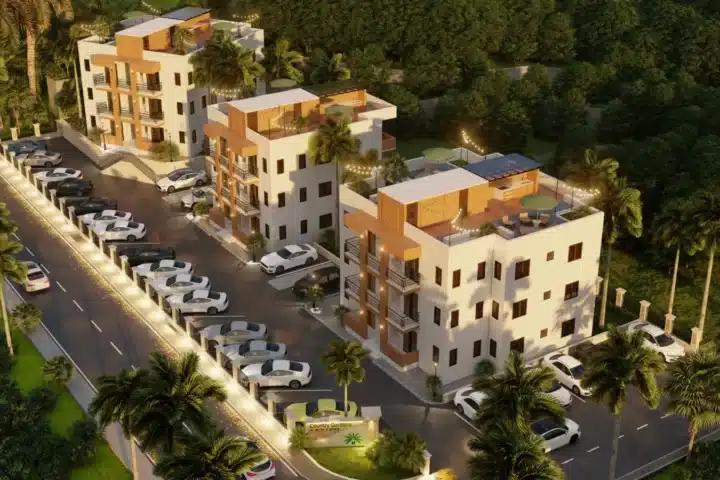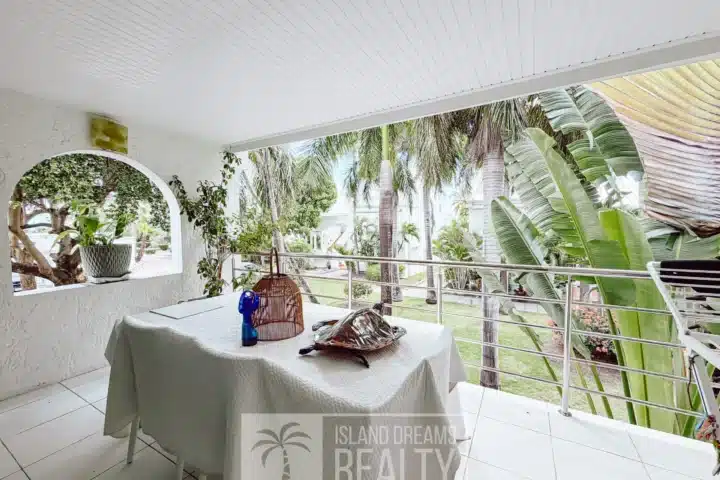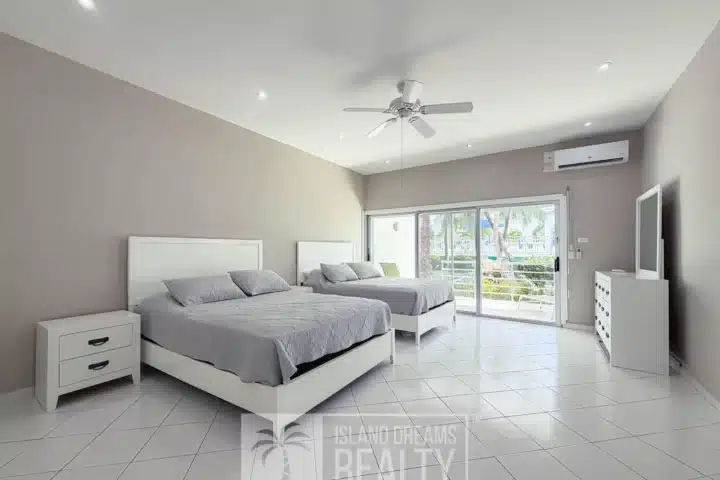

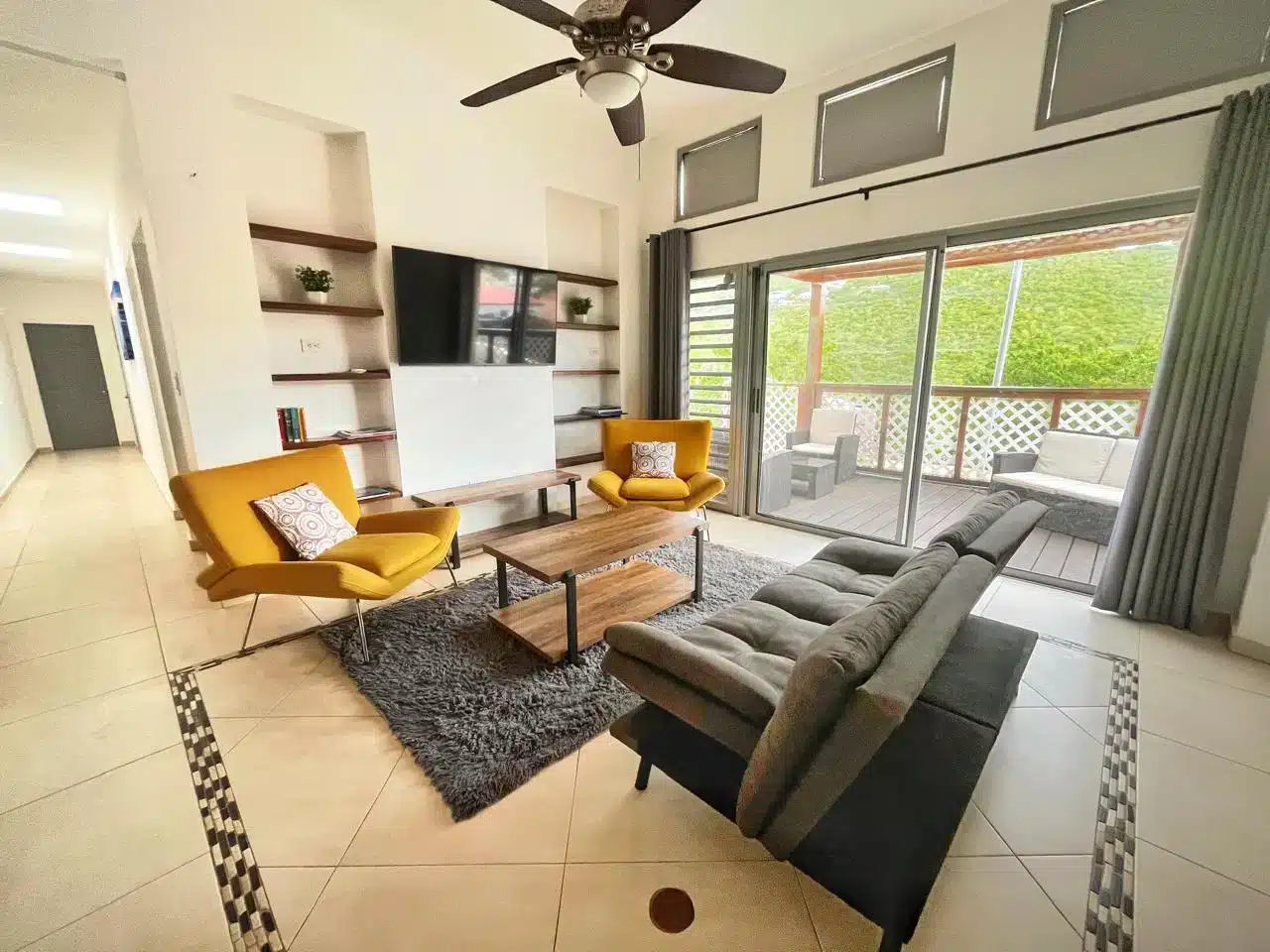
Want distance from the tourist strip without leaving the island? Island Dreams Realty represents buyers across Sint Maarten’s residential neighborhoods — from Dutch Cul-de-Sac to Bellevue — with local knowledge of which streets are actually quiet, not just quiet in a listing description.
Most people picture Sint Maarten as Simpson Bay traffic and Maho nightlife. That’s one side of the island. This guide covers six neighborhoods built around residential, day-to-day living instead — Dutch Cul-de-Sac, Madame Estate, Monte Vista, Mary’s Fancy, Ebenezer/Valley Estate, and Bellevue on the French side — several of which carry genuine plantation-era history alongside their present-day quiet.
Table of Contents
- What Makes a Neighborhood “Quiet” on Sint Maarten?
- Dutch Cul-de-Sac
- Madame Estate
- Monte Vista
- Mary’s Fancy
- Ebenezer/Valley Estate
- Bellevue (French Side)
- Buying Near a Designated National Monument
- Getting Around: Realistic Commute Times
- What These Neighborhoods Have in Common
- Quiet vs. Convenient: The Trade-Off
- Quiet Neighborhoods at a Glance
- What to Consider Before Buying in a Quiet Neighborhood
- Questions to Ask Before You Buy
- Frequently Asked Questions
Quick Answer: Which Sint Maarten Neighborhoods Are Quietest?
| Sint Maarten’s quietest residential neighborhoods sit away from the tourist-heavy west coast. Dutch Cul-de-Sac, Madame Estate, Monte Vista, Mary’s Fancy, Ebenezer/Valley Estate, and Bellevue (French side) are known for low traffic, family-oriented streets, and a slower pace of daily life. Several also carry real plantation-era heritage — Mary’s Fancy and Ebenezer are both designated national monuments, and Dutch Cul-de-Sac alone holds five of the island’s 51 protected historic sites. |
What Makes a Neighborhood “Quiet” on Sint Maarten?
Sint Maarten’s west coast — Simpson Bay, Maho, Cupecoy — is built around tourism, nightlife, and short-term rental turnover. The neighborhoods in this guide sit apart from that strip. They’re defined less by price tier or prestige and more by residential character: local traffic instead of rental-car turnover, longer-term neighbors instead of weekly guests, and a pace of life closer to how residents actually live day to day rather than how visitors experience the island.
What’s less obvious is how much history sits underneath that quiet. Several of these neighborhoods take their names from actual 18th- and 19th-century plantations, and two carry official national monument status today. That heritage isn’t just trivia — it shapes lot sizes, road layouts, and in some cases building restrictions that still influence what gets built and where.
Dutch Cul-de-Sac
Dutch Cul-de-Sac is one of the island’s more inland, low-key residential areas, away from beachfront traffic patterns entirely. It’s a practical choice for buyers who want to be close to the island’s center without living inside a tourist corridor. For current listings and a fuller area breakdown, see the Dutch Cul-de-Sac community page.
The area also holds more protected heritage than almost anywhere else on the island: of Sint Maarten’s 51 officially designated historic monuments, five are located in Dutch Cul-de-Sac, including the Dutch Reformed Cemetery. That density of protected sites is part of what keeps the area’s character intact — new development has to work around genuine historic fabric rather than replacing it.
Madame Estate
Madame Estate is a residential pocket known for its local, lived-in character rather than resort-adjacent development, sitting close to Philipsburg and the Dutch Quarter. It suits buyers prioritizing a settled neighborhood over walkability to beach nightlife, with its own shopping center covering everyday errands without a drive into town. See current inventory on the Madame Estate community page.
Like several neighborhoods in this guide, Madame Estate’s name traces back to a real plantation — one that grew grapes before switching to sugar production in 1725, and whose main building was later sold to a salt company in 1870 to serve as its headquarters. That layered commercial history (grapes, then sugar, then salt) is part of why the area reads as genuinely established rather than newly subdivided.
Monte Vista
Monte Vista offers a quieter residential setting with a mix of single-level and multi-bedroom homes suited to long-term residents and families, positioned on the hillside near Point Blanche with views over the surrounding area. It’s away from the island’s busiest tourist corridors while still being reasonably central. Browse current Monte Vista listings on the Monte Vista community page.
Monte Vista’s elevated, hillside position is also what gives it a track record as a stable long-term rental market — full-time residents and long-term investors tend to favor it precisely because scenic, elevated residential neighborhoods hold occupancy and value more predictably than short-term tourist-driven inventory.
Mary’s Fancy
Mary’s Fancy is a residential neighborhood known for standalone houses on their own lots — a different property profile from the condo-heavy west coast. It suits buyers who want a family home rather than a rental-oriented condo unit. See what’s currently listed on the Mary’s Fancy community page.
The neighborhood takes its name directly from Mary’s Fancy Plantation, on L.B. Scott Road, one of only 51 officially designated national monuments on Sint Maarten. That protected status doesn’t extend to every home in the neighborhood, but it does mean the area’s founding property is a genuine, documented piece of the island’s plantation-era history rather than a marketing name attached to a modern subdivision.
Ebenezer/Valley Estate
Ebenezer/Valley Estate is a residential area removed from the coastal tourism belt, appealing to buyers who want distance from short-term rental turnover and beach traffic. Explore current listings on the Ebenezer/Valley Estate community page.
The name actually covers two distinct layers of history. Ebenezer Plantation, near S. Hazel and R. Mayan Roads in St. Peter, is one of Sint Maarten’s officially designated national monuments. Valley Estate, by contrast, is one of the island’s newer planned developments — a central Sint Maarten community platted across 184 lots. That combination of protected plantation heritage alongside a modern, planned residential layout is fairly unique among the neighborhoods in this guide.
Bellevue (French Side)
Bellevue sits on the French side of the island (Saint Martin) and offers a quieter, more residential counterpart to the busier French coastal towns like Marigot and Grand Case. It’s a relevant option for buyers open to either side of the island who prioritize calm over beachfront density. See current Bellevue listings on the Bellevue community page.
Buying on the French side also means a genuinely different transaction process than the other five neighborhoods in this guide — French notarial procedure rather than the Dutch-side system — which is worth understanding early if Bellevue is on your shortlist alongside Dutch-side options.
Buying Near a Designated National Monument
Because Dutch Cul-de-Sac, Mary’s Fancy, and Ebenezer/Valley Estate all sit at or near officially protected sites, it’s worth understanding what that designation actually means for a buyer rather than treating it as a footnote. Sint Maarten currently recognizes 51 designated monuments, a status that protects the specific structure or site itself — not automatically the surrounding land — from demolition or unapproved alteration.
In practice, this means a home a few lots away from a monument like Mary’s Fancy Plantation or the Ebenezer Plantation site can usually be renovated or rebuilt under normal permitting, while the monument structure itself cannot. The exception is if your specific parcel includes or directly abuts protected ground — in that case, any renovation plans should be checked against the Monuments Bureau’s records before you go under contract, not after. This is a due-diligence step worth raising with your attorney specifically in these three neighborhoods, in a way it simply doesn’t apply in Simpson Bay or Cupecoy.
Getting Around: Realistic Commute Times
“Central” and “quiet” aren’t always the same distance from Philipsburg, and it’s worth separating the two rather than assuming every neighborhood in this guide is equally convenient. Madame Estate and Dutch Cul-de-Sac sit closest to the island’s center, generally putting Philipsburg, the hospital, and main shopping areas within a short, uncongested drive. Monte Vista’s hillside position near Point Blanche keeps it similarly close to town despite its elevated, quieter feel.
Mary’s Fancy and Ebenezer/Valley Estate sit further from the immediate town center, trading a few extra minutes of drive time for more space and quieter streets — a reasonable trade for most buyers in this guide, but worth test-driving at actual commute hours rather than assuming from a map. Bellevue, on the French side, operates on its own geography entirely, with its own drive times to Marigot and the French-side amenities rather than to Philipsburg.
What These Neighborhoods Have in Common
Beyond simply being quiet, a pattern runs through most of these six areas: genuine pre-tourism history. Four of the six — Dutch Cul-de-Sac, Madame Estate, Mary’s Fancy, and Ebenezer — trace back to documented 18th- or 19th-century plantations, and two of those carry official national monument status today. That’s a meaningfully different foundation than a neighborhood built and named for a marketing campaign in the last two decades.
The practical upshot for buyers: these areas tend to have more established road networks, mature landscaping, and in some cases legal protections around historic structures that limit how densely adjacent land can be redeveloped — all of which contributes to why they’ve stayed quiet while the west coast has intensified around tourism.
That’s worth weighing against Bellevue and Monte Vista specifically, which don’t share the same plantation-era documentation as the other four. Bellevue’s quiet comes from its French-side position relative to Marigot and Grand Case rather than protected heritage, and Monte Vista’s comes from elevation and hillside geography near Point Blanche rather than monument status. Neither is a lesser choice for it — the underlying mechanism for staying quiet is just different, which matters if heritage specifically, rather than quiet generally, is part of what you’re looking for.
Quiet vs. Convenient: The Trade-Off
It’s worth being honest about what you give up for quiet. None of these six neighborhoods puts you walking distance from a beach or a restaurant strip the way Simpson Bay or Maho does. Madame Estate and Dutch Cul-de-Sac are the most central of the group, with reasonably short drives to Philipsburg; Mary’s Fancy, Ebenezer/Valley Estate, and Monte Vista trade some of that centrality for more space and quiet; Bellevue, on the French side, is its own case entirely, with a different day-to-day rhythm than any Dutch-side option.
For buyers who work from home, are raising a family, or simply want to own a car and not think about beach walkability, that trade-off usually reads as a clear win. For buyers whose priority is walking to dinner every night, it’s worth being honest that these six neighborhoods aren’t built for that lifestyle — and that’s fine, since Simpson Bay, Maho, and Cupecoy exist for exactly that instead.
Quiet Neighborhoods at a Glance
| Neighborhood | Side of Island | Notable Feature |
| Dutch Cul-de-Sac | Dutch | 5 designated national monuments, incl. Dutch Reformed Cemetery |
| Madame Estate | Dutch | Historic plantation site; near Philipsburg, own shopping center |
| Monte Vista | Dutch | Hillside near Point Blanche; stable long-term rental market |
| Mary’s Fancy | Dutch | Named for a designated national monument plantation |
| Ebenezer/Valley Estate | Dutch | Monument-status plantation plus a 184-lot modern development |
| Bellevue | French | Quiet alternative to Marigot and Grand Case |
This is a different lens than our best neighborhoods to buy in Sint Maarten guide, which ranks areas by prestige and price tier, or our best areas to buy real estate breakdown, which is organized around investment yield. This guide is about day-to-day quiet and, in several cases, genuine heritage — not value or status.
What to Consider Before Buying in a Quiet Neighborhood
Quiet, residential neighborhoods carry a different risk and reward profile than the tourist corridor, and it’s worth weighing honestly before you commit. None of the factors below should rule out a purchase in these six areas — they’re simply the trade-offs that come with prioritizing quiet and heritage over walkability and rental yield, and worth planning around rather than discovering after closing:
- Resale liquidity is generally lower than in Simpson Bay or Cupecoy — fewer comparable transactions means it can take longer to sell when you’re ready, though it also means less competition when you’re buying.
- Short-term rental income is limited or impractical in most of these areas — this is a buy-to-live or long-term-rental play, not a vacation rental strategy.
- Properties near a designated monument (as in parts of Dutch Cul-de-Sac, Mary’s Fancy, and Ebenezer) may carry restrictions on renovation or redevelopment of adjacent land — worth confirming with the Monuments Bureau before you assume you can expand or rebuild.
- Bellevue’s French-side process differs meaningfully from the other five Dutch-side neighborhoods, from notarial procedure to tax treatment — factor extra time into a French-side purchase timeline.
- School and amenity distances vary more than the map suggests — confirm actual drive times to the specific schools, clinics, or supermarkets your household uses regularly, rather than the nearest option generically.
Questions to Ask Before You Buy
- Is the property, or adjacent land, subject to any national monument or heritage protection that could limit future renovation?
- How many comparable sales have closed in this specific neighborhood in the past 12 months?
- What is the realistic drive time to Philipsburg, the airport, and the nearest supermarket — not the marketed distance?
- If you’re considering Bellevue, have you confirmed the French-side notarial process and timeline with a lawyer who works both sides of the island?
- Is the lot part of a newer planned development (like Valley Estate) or an older, organically grown residential area — and does that match what you’re looking for in terms of lot size and neighbors?
Frequently Asked Questions
1. What is the quietest neighborhood in Sint Maarten?
Areas like Dutch Cul-de-Sac, Madame Estate, and Ebenezer/Valley Estate are among the island’s quietest, as they sit away from the tourist-heavy west coast and its short-term rental density.
2. Is Monte Vista a good area for families?
Monte Vista offers a residential mix suited to long-term residents and families, positioned on the hillside near Point Blanche and away from the island’s busiest tourist corridors.
3. What kind of properties are available in Mary’s Fancy?
Mary’s Fancy is known for standalone houses on their own lots, a different profile from the condo-heavy west coast, and takes its name from a designated national monument plantation on L.B. Scott Road.
4. Is Bellevue on the Dutch or French side?
Bellevue is on the French side (Saint Martin), offering a quieter counterpart to busier French-side towns like Marigot, and follows French notarial process rather than the Dutch-side transaction system.
5. Are these neighborhoods far from the beach?
They’re generally more inland or residential than beachfront, prioritizing quiet over walkable beach access — a trade-off worth weighing against your lifestyle priorities.
6. Does Dutch Cul-de-Sac have any historic sites?
Yes. It holds five of Sint Maarten’s 51 officially designated national monuments, including the Dutch Reformed Cemetery.
7. Is Valley Estate the same as Ebenezer?
They’re grouped together as one community, but Ebenezer refers to the historic, monument-status plantation area, while Valley Estate is a newer planned development of 184 lots in central Sint Maarten.
8. Can I rent out a property short-term in these neighborhoods?
Generally no, or only with limited demand. These are buy-to-live or long-term-rental neighborhoods rather than vacation rental markets, unlike Simpson Bay or Maho.
9. Does national monument status affect nearby properties too?
Generally the protection applies to the specific structure or site itself, not automatically the surrounding land — but if your parcel includes or directly abuts protected ground, check with the Monuments Bureau before assuming you can renovate or rebuild.
10. Which of these neighborhoods is closest to Philipsburg?
Madame Estate and Dutch Cul-de-Sac sit closest to the island’s center, generally putting Philipsburg and main shopping areas within a short drive.
11. Who do I contact about buying in a quiet neighborhood in Sint Maarten?
Sacha van den Bosch, broker at Island Dreams Realty.
About Island Dreams Realty
Island Dreams Realty is a Sint Maarten-based brokerage with leadership lineage dating back to 1979, led by Broker Sacha van den Bosch, President and Founding Member of the St. Maarten Real Estate Alliance, and affiliated with Century 21 St. Maarten. The team represents inventory across Sint Maarten, Saint Martin, and a further eleven Caribbean markets.
Looking for a quiet neighborhood? Get current listings and neighborhood guidance verified before you commit. Free buyer consultation — no obligation.
Talk to Sacha van den Bosch | idr.sx