

Beachfront and ocean-view property in Sint Maarten at a glance
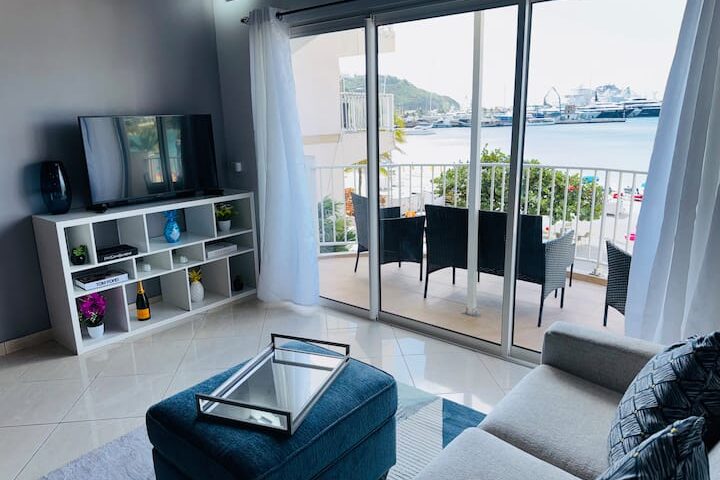
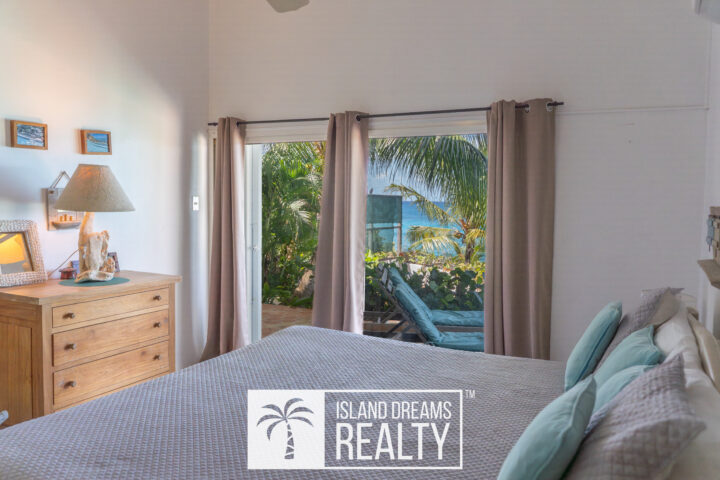
Beachfront property in Sint Maarten buys the scarcest thing on the island, a home on the sand, together with the strongest vacation-rental demand; an ocean-view home on the hillside buys most of the scenery for less money and sits above storm-surge reach. The premium is worth paying if you will use the beach or rent to guests who want it, and only after the insurance quote, the salt damage and the land in front of the view have been checked.
- Three kinds of waterfront: beachfront on the sand, lagoon-front on Simpson Bay Lagoon, and ocean-view hillside homes, which Island Dreams Realty calls the value sweet spot.
- The sand stays public: in a 2026 ruling, the Court of First Instance found that a private company never acquired ownership of Mullet Bay Beach, which remains public property.
- Insurance: full cover including hurricane runs about 0.6% to 1.2% of rebuild value a year, with exposed coastlines at the top of the range and flood cover adding about 0.15% to 0.35%.
- Salt: FEMA notes that airborne salt is heaviest near breaking waves and declines rapidly over the first 300 to 3,000 feet inland, so the front row corrodes fastest.
- Views: the Dutch side’s island-wide zoning plan remains incomplete, so a view is only as safe as the land in front of it.
- French side: Saint-Martin’s 2021 risk plan maps the coast by flood depth and bans most new building in its highest-risk zone.
Table of Contents
- What counts as beachfront, lagoon-front and ocean view in Sint Maarten?
- What does the beachfront premium actually buy?
- Is an ocean view from the hillside the smarter buy?
- How do you check that an ocean view is protected?
- What does beachfront cost you in insurance and upkeep?
- How exposed is beachfront property to storm surge and waves?
- What changes for beachfront property on the French side?
- Where beachfront and ocean views show up in today’s neighborhoods
- Frequently asked questions
- What this means for people buying here
What counts as beachfront, lagoon-front and ocean view in Sint Maarten?
Waterfront property in Sint Maarten comes in three kinds that price and live very differently: beachfront homes directly on the sand, lagoon-front homes on Simpson Bay Lagoon that often have a private dock, and ocean-view hillside homes that look at the sea from above. Our St Maarten real estate guide calls true beachfront the scarcest and most valuable of the three, and with 37 beaches and one of the largest inland lagoons in the Caribbean, there is a waterfront option at most budgets.
Listing language blurs these lines. “Ocean view” can mean a full panorama from the living room or a glimpse from one balcony, and “beachfront” is sometimes used for a building across a road from the sand. Ask how far the door is from the water, which rooms hold the view, and what stands between the property and the beach.
Beachfront also does not mean owning the beach. In 2026 the Court of First Instance found that a private company had never acquired ownership of the beach at Mullet Bay, and the Government of Sint Maarten says the beach “has always been, and remains, public property belonging to the people of Sint Maarten.” The government is still working out how the legal boundaries of “the beach” will be defined, so ask the notary to show exactly where any beachfront parcel ends.
What does the beachfront premium actually buy?
The beachfront premium in Sint Maarten buys three things: direct access to the sand, the island’s strongest rental demand, and scarcity. Our comparison of beachfront vs hillside rates rental demand on the beach as very strong, against strong in view areas, and beachfront and resort condos tend to perform best as vacation rentals.
Demand concentrates in tourist-favored areas near beaches and amenities, such as Maho, Simpson Bay, Cupecoy and Dawn Beach. At the top of the condo market, above $1 million, beachfront and marina residences carry the strongest short-term rental premiums because of their direct access to the water, along with the highest HOA fees and windstorm insurance costs.
Scarcity supports value over time. Beachfront land on the island is finite and much of it was developed decades ago, which keeps inventory tight. Every Dutch-side transaction requires a formal property appraisal, and value here rests on comparable sales, location, condition, views and rental potential.
IDR does not publish a single percentage for the beachfront premium, and with no MLS or central pricing database on the island, any one figure would mislead. The gap changes by beach, building, floor and view, so the honest way to price it is to compare recent sales on and off the sand in the same area; ask our team for those comparables before you make an offer.
The premium does not buy calm water, quiet or a private stretch of sand. Guana Bay’s beach is known for strong surf, areas near the airport such as Maho come with aircraft noise to weigh, and Simpson Bay is one of the island’s busiest districts.
Is an ocean view from the hillside the smarter buy?
For many buyers, an ocean-view home on the hillside is the better value: it keeps the panorama, catches the trade winds and sits above storm-surge reach, at prices well below true beachfront. On a compact island the beach is rarely far, so many buyers take the view and keep the coast within a short drive.
The hillside has its own costs. IDR’s cost guide places properties at elevation, like those directly on exposed coastlines, at the higher end of the insurance range; height removes surge risk, not wind. Slopes also bring retaining walls, cut-and-fill building platforms and drainage that need close inspection.
Within a building, the view usually rises with the floor. Upper floors with ocean views typically sell for more than ground-floor or garden-view units, so compare the same building at different heights before deciding what the view is worth to you.
How do you check that an ocean view is protected?
An ocean view in Sint Maarten is protected only by whatever physically or legally stops someone building in front of it, so check the land between you and the sea before you pay for the view. On the Dutch side, zoning offers less protection than many buyers assume: a government release on the building permit process in November 2025 stated that the long-awaited island-wide zoning plan remains incomplete, leaving staff to apply outdated policies case by case, with the 1935 Building and Housing Ordinance as the main legal basis for permits.
|
What sits in front of the view |
How secure the view is |
What to check
|
|---|---|---|
|
Open sea or a public beach |
Strongest |
Where your parcel ends and the beach begins |
|
A road, rocks or a cliff edge |
Strong |
That the strip is not a separate buildable lot |
|
A planned community with architectural rules |
Moderate |
Height, roofline and landscaping rules in the community documents |
|
A vacant lot or a low, older building |
Weakest |
Whether the lot is for sale, permitted or under application |
Use these six steps before you make an offer on a view property:
- Stand where you will live. Check the view from the main living space and terrace at the height you will actually occupy, and note every lot, roof and tree between you and the water.
- Identify every buildable lot in the sight line. Ocean-view lots, some sold with building plans, come up for sale in the same areas as finished homes, so ask whether the land below is listed, owned by a developer or already permitted.
- Ask about permits next door. Have your agent or architect check with VROMI’s Department of Permits whether a building permit has been requested or issued for neighboring lots, and what height the rules allow there.
- Read the community rules. In planned communities, architectural standards can do the job zoning does not; Indigo Bay, for example, is known for strict architectural standards. Ask for the rules on building height, rooflines and landscaping.
- Ask the notary about the title. The notary verifies title through the Kadaster, the public land registry, so ask whether any registered right or restriction affects your lot or the lots in your sight line.
- Price the risk honestly. If the view could be blocked, value the property as if it were, and treat the view as a bonus rather than the thing you are paying for.
What does beachfront cost you in insurance and upkeep?
Living on the water costs more in Sint Maarten because the sea works on a property in two ways: storm risk raises the insurance premium, and salt raises the maintenance budget.
Fully insured policies including hurricane cover run about 0.6% to 1.2% of rebuild value a year, or about US3,000toUS6,000 on a US$500,000 property. IDR’s guide to insurance and upkeep adds that coastal properties may need flood cover at about 0.15% to 0.35% of rebuild value a year, and that homes directly on exposed coastlines sit at the higher end of the premium range. Post-2017 reinforced-concrete construction qualifies for lower rates, which is one more reason to get a written quote on the specific property before you offer.
Salt is the slower cost. FEMA’s technical bulletin on coastal corrosion explains that salt spray from breaking waves and onshore winds significantly accelerates the corrosion of metal building parts, and that salt in the air is greatest near breaking waves and declines rapidly over the first 300 to 3,000 feet inland. Tests from the 1940s cited by FEMA found iron corroding 10 times faster 80 feet from the shoreline than 800 feet from it, and shorelines with mostly onshore winds corrode faster than those with mostly offshore winds.
On this island the damage shows up in concrete and equipment. Salt air attacks the reinforcing steel inside concrete, which rusts, expands and cracks the surface, visible as rust staining, bulging render or flaking patches on balconies, railings and slab edges. Our guide to salt and coastal exposure notes that on a beachfront property this can progress from invisible to structural in under a decade if the original concrete cover was inadequate, and that AC condensers, window hardware, hinges and gate motors wear out early.
Budget for it from day one. IDR’s maintenance budgets include exterior repainting every four to six years, and on the front row you should ask the seller for maintenance records and when the windows, railings and AC units were last replaced.
How exposed is beachfront property to storm surge and waves?
Storm surge is the risk that separates a beachfront home from an ocean-view one. The National Hurricane Center defines storm surge as an abnormal rise in water generated by a storm over and above the predicted tide, calls it the leading cause of hurricane fatalities, and warns that waves on top of the surge can add further feet of water.
Waves do much of the damage to buildings on the beach. The NHC notes that extended pounding by frequent waves can demolish any structure not specifically designed to withstand such forces, and that erosion can undermine the foundations of buildings that survive the wind. Hurricane Irma, which affected an estimated 90% of the island’s infrastructure in 2017, is why construction date and repair history now come first in any coastal purchase, and our guide to post-Irma building codes explains what Building Code BC0 changed.
Check the ground as well as the building. Ask about the property’s flood history, elevation and drainage, where the pump, electrical panel and any generator sit, and whether they are protected from flooding. Low-lying property near Simpson Bay Lagoon calls for questions about ground-floor moisture and how the site drains in heavy rain.
Building lines near the sea also need checking lot by lot. Because permit decisions on the Dutch side are made case by case while the zoning plan remains incomplete, ask an architect what can be permitted on the specific parcel before you buy with plans for a pool deck, seawall or extension.
What changes for beachfront property on the French side?
Beachfront property on the French side of the island is governed by a formal coastal risk plan that can forbid new building on the most exposed land. The risk prevention plan for Saint-Martin, approved by prefectoral order on 3 November 2021, grades coastal flooding as low below 0.5 meters of water, medium from 0.5 to 1 meter, strong from 1 to 2 meters or with wave impact, and very strong above 2 meters or with wave impact.
Those hazard grades translate into four regulated zones: dark red, red, dark blue and blue. In the dark red zone, works that would increase the number of people or properties exposed are prohibited, and all construction is banned except what the plan expressly authorizes; repairs to existing buildings must use water-resistant materials below the reference flood level. The plan is a public-utility easement that takes precedence over the Collectivité’s own planning documents.
Insurance follows the map. The plan notes that under the French insurance code, insurers are not obliged to provide natural-disaster cover for new buildings put up in a zone it declares unbuildable, or for buildings that break its rules. Add the French side’s annual property tax, a capital gains tax of up to 33% and closing fees of about 10% to 19%, and a French-side beachfront purchase needs its own checklist, starting with asking the notaire which zone the parcel sits in. Our Dutch side vs French side comparison covers the rest.
Where beachfront and ocean views show up in today’s neighborhoods
Sint Maarten’s waterfront splits by coast: the west side offers the best sunsets and most of the island’s dining and entertainment, while the east side offers the best sunrises, a quieter pace and Atlantic views from the hills.
- Cupecoy sits on limestone cliffs on the southwest coast, and its high-rise residences offer some of the island’s most dramatic sea views. The beaches below are small and cliff-sheltered, so check how you reach them and how the building handles salt on balconies and railings.
- Simpson Bay wraps around the island’s large inland lagoon, with marinas, a long beach and both beachfront and lagoon-front homes. The lagoon that makes it desirable also defines its risk, so ask about flood history and drainage.
- Pelican Key combines a central location with ocean views, and many homes have direct beach access, private boat docks or lagoon frontage. On its hillside lots, retaining walls and slope drainage matter more than anything on the roof.
- Dawn Beach on the quieter sunrise coast has a white-sand beach with reef snorkeling offshore, and resort-style condominium communities and villas overlook the water. Persistent sea spray here shortens the life of windows, railings, hardware and AC condensers.
- Guana Bay on the east coast is known for hillside villas with open Atlantic views and a quiet, private character. Oceanfront and cliffside homes here need close scrutiny of salt corrosion, rebar spalling and roof anchoring.
Mullet Bay adds the island’s 18-hole golf course to a long white-sand beach, and many properties there sit on long-lease land, so confirm the title type early with our guide to freehold vs long-lease land. Our guides to the best areas to buy and the most exclusive neighborhoods cover other view-led areas, including Indigo Bay, Beacon Hill and Terres Basses on the French side.
Frequently asked questions
Is a beachfront home in Sint Maarten worth the extra cost?
A beachfront home is worth the premium if you will use the beach often or rent to vacation guests, because beachfront drives the island’s strongest rental demand. It is harder to justify if you mainly want the view, since an ocean-view hillside home keeps most of the scenery for less money and sits above storm-surge reach. Compare recent sales on and off the beach in the same area before you accept the premium.
Can you own the beach in front of a property in Sint Maarten?
Do not count on it. In 2026 the Court of First Instance found that a private company had never acquired ownership of Mullet Bay Beach, and the Government of Sint Maarten says that beach remains public property belonging to the people. Ask the notary to show exactly where your parcel ends.
How much more does it cost to insure a beachfront home in Sint Maarten?
Full cover including hurricane runs about 0.6% to 1.2% of rebuild value a year, and homes directly on exposed coastlines sit at the higher end of that range. Coastal properties may also need flood cover, which IDR’s cost guide puts at about 0.15% to 0.35% of rebuild value a year on top.
Does salt air really damage beachfront homes faster?
Yes. FEMA’s coastal corrosion guidance says airborne salt is greatest near breaking waves and declines rapidly over the first 300 to 3,000 feet inland, and tests it cites found iron corroding 10 times faster 80 feet from the shore than 800 feet away. In Sint Maarten that shows up as rusting rebar, spalling concrete and short-lived AC units, railings and window hardware.
Can a neighbor block my ocean view in Sint Maarten?
A neighbor can block a view if there is buildable land between you and the sea. The Government of Sint Maarten reported in November 2025 that the island-wide zoning plan remains incomplete, so permit decisions are made case by case. Check vacant lots in your sight line, permit applications, community architectural rules and the title before you pay for a view.
Which areas of Sint Maarten have the best ocean views?
Cupecoy’s cliffside residences, the hillsides of Pelican Key and Beacon Hill, Indigo Bay’s slopes above the Caribbean and Guana Bay’s Atlantic-facing hills are all known for their views. For direct beach access, look at Dawn Beach, Simpson Bay, Cupecoy and Mullet Bay.
Is it safe to buy beachfront property in Sint Maarten after Hurricane Irma?
Beachfront property can be a sound buy if the specific building was built or repaired to current standards, and post-2017 reinforced-concrete construction qualifies for lower insurance rates. Ask for the construction date, the permit history and evidence of how any Irma damage was repaired, and commission an independent inspection.
Are beachfront rules different on the French side of the island?
Yes. Saint-Martin’s 2021 risk prevention plan sorts the coast into four regulated zones by flood hazard, bans most new construction in the highest-risk dark red zone, and lets insurers refuse natural-disaster cover for new buildings that break its rules. The French side also has an annual property tax, a capital gains tax of up to 33% and closing fees of about 10% to 19%.
What this means for people buying here
The beachfront premium in Sint Maarten pays for access, rental demand and scarcity, and you pay it back in insurance, salt maintenance and storm exposure. An ocean view from the hillside keeps most of the scenery with less of that cost, but only if the land in front of it cannot be built on. Neither choice is wrong; the mistake is paying for a beach or a view without checking what the premium rests on.
Before you commit, line up recent comparable sales on and off the water, a written insurance quote, an inspection that looks for salt damage, and a clear answer about every lot in your sight line. Browse current properties for sale, then view ocean-view homes with our team, in person or by video walkthrough, and we will help you see exactly what each premium buys.