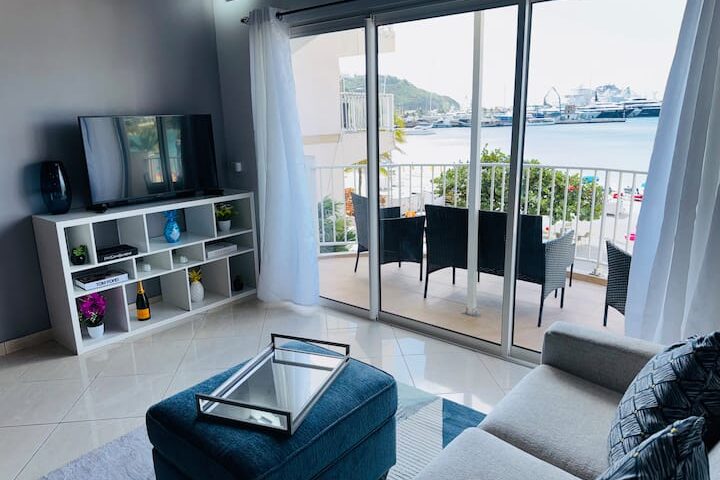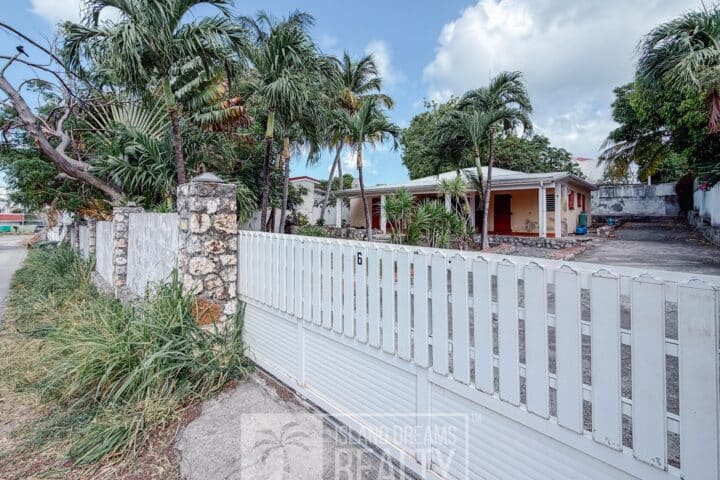


Villa or condo in Sint Maarten at a glance
For most part-time owners and first-time buyers, a condo is the better buy in Sint Maarten: it costs less to enter and to hold, the association looks after the roof, grounds and building insurance, and beachfront and resort condos tend to perform best as vacation rentals. A villa is the better buy if you want land, privacy and your own pool, will spend long stretches on the island, and accept that every repair and every hurricane decision is yours.
- Purchase price: condos run from about $245,000 for a studio to over $2.9 million, with a median asking price around $650,000. Ocean-view villas in Beacon Hill and Pelican Key run from about $450,000 to $1.5 million and up.
- HOA fees: about US200amonthinmodestcomplexestoUS2,500 or more in ultra-luxury branded residences. Most mid-range condos in Simpson Bay, Maho, Cupecoy and Pelican Key pay US400toUS1,000.
- Yearly holding cost: Island Dreams Realty’s cost models put a US350,000SimpsonBaycondoataboutUS9,600 a year and a US650,000PelicanKeyvillaataboutUS21,800.
- Insurance: full cover including hurricane runs about 0.6% to 1.2% of rebuild value a year. Condo owners usually insure only contents, because building insurance sits inside the HOA fee.
- Hurricane exposure: construction date and roof design matter more than property type, and post-2017 reinforced-concrete construction qualifies for lower insurance rates.
- Taxes: identical for both on the Dutch side, with no annual property tax, no capital gains tax, and closing costs of roughly 6% to 7%.
Table of Contents
- How do villa and condo prices compare in Sint Maarten?
- What does each one cost to own every year?
- How do HOA fees work, and do villas pay them too?
- Which is safer in a hurricane, and how does insurance differ?
- Which earns more as a rental, and what do HOA rules allow?
- How do security and gated living differ for villas and condos?
- Who should buy a villa, and who should buy a condo?
- Where villas and condos show up in today’s neighborhoods
- Frequently asked questions
- What this means for people buying here
How do villa and condo prices compare in Sint Maarten?
Condos are the cheaper way into Sint Maarten property, and villas cost more mainly because you buy land, outdoor space and often a pool along with the house. Our guide to condos for sale puts condos at roughly $245,000 for a studio up to more than $2.9 million for a beachfront penthouse, with a median asking price around $650,000. Starting prices run from about $285,000 in Maho to $380,000 in Cupecoy, which holds roughly half of the island’s active condo listings.
Villas start roughly where mid-range condos sit. In the Beacon Hill and Pelican Key corridor, villas and freestanding homes with ocean views run from about $450,000 to $1.5 million and up, according to our guide to rental yields, and IDR’s Platinum Dreams listings reach $22 million.
Townhouses sit in between: a house with its own front door, usually in a small development with a shared fee. Our comparison of villa vs townhouse vs family home covers that middle ground and the extra vetting any freestanding house needs.
Sint Maarten has no MLS or central pricing database, so many island websites are out of date. Ask for recent comparable sales rather than relying on portal prices, and browse current properties for sale with an agent who sees what is actually closing.
What does each one cost to own every year?
A condo’s yearly bill is dominated by one predictable line, the HOA fee, while a villa’s is a longer list of separate costs that usually adds up to more. IDR’s guide to annual ownership costs builds its examples from client portfolios, and its two closest profiles compare like this:
| Annual cost line | US$350,000 condo, Simpson Bay | US$650,000 villa, Pelican Key
|
|---|---|---|
| HOA fees | US$4,800 | Not in profile |
| Insurance | US$600 (contents only) | US$4,500 (full cover) |
| Utilities | US$2,400 (part-time use) | US$6,600 (full-time use) |
| Pool and garden | None | US$4,200 |
| Maintenance and management | US$1,800 | US$6,500 (maintenance reserve) |
| Total per year | US$9,600 | US$21,800 |
| Per month | US$800 | US$1,817 |
The profiles are not perfectly like for like, since the condo assumes part-time use and the villa full-time use. Across all of IDR’s profiles, total holding costs fall between 2.5% and 4.3% of property value a year.
Air conditioning drives much of the gap. IDR puts monthly utilities at US330toUS665 for a one-bedroom condo and US800toUS1,810 for a three-bedroom villa with a pool, and electricity on the island is relatively expensive because it is largely fuel-generated.
Maintenance is the line villa buyers most often underestimate. IDR budgets 0.5% to 1% of property value a year for a condo interior, 1.5% to 2.5% for a freestanding home with a garden and pool, and 2.5% to 3.5% for a luxury villa. On a US500,000villawithapool,thatmeansUS7,500 to US$12,500 a year for pool care, gardening, AC servicing, pest control and exterior repainting every four to six years.
If you will not be on the island full-time, a villa needs property management, which IDR’s cost guide prices at a flat US200toUS600 a month for absentee management of an owner-occupied home. Taxes, by contrast, do not separate the two: neither pays an annual property tax or capital gains tax on the Dutch side, and closing costs total roughly 6% to 7%, made up of about 4% transfer tax, 1% to 2% notary fees and about 1% for a mortgage deed if you finance. Your home-country tax rules may still apply, so confirm your own position with a cross-border tax advisor.
How do HOA fees work, and do villas pay them too?
HOA fees in Sint Maarten range from about US200amonthformodestcomplexestoUS2,500 or more for ultra-luxury branded residences, and most mid-range condos in Simpson Bay, Maho, Cupecoy and Pelican Key fall between US400andUS1,000 a month. For most condo owners, the association fee is the largest recurring cost.
The fee pays for much of what a villa owner buys separately: shared amenities such as the pool and gym, common-area maintenance and landscaping, reserve contributions and, usually, building insurance. Some associations also include water or a generator, so read the fee statement line by line; two condos at the same price can carry fees $500 to $700 a month apart because of building amenities.
The reserve fund matters more than the monthly figure. IDR’s cost guide treats reserves of 20% or more of the annual operating budget as healthy, and warns that poorly reserved associations can levy special assessments of US5,000toUS30,000 per unit for roofs, elevators or post-storm repairs. Our guide to HOA fees and house rules lists the documents to request before you offer.
Villas are not always fee-free. A villa in a gated community typically pays US300toUS800 a month for road maintenance, the security gate and landscaping, and townhouses often share walls, roofs or water storage under a community fee.
Which is safer in a hurricane, and how does insurance differ?
Neither a villa nor a condo is safer by type: in Sint Maarten, construction date, roof design and the quality of past storm repairs decide how a building performs. Hurricane season runs June 1 to November 30, the National Hurricane Center’s climatology puts the Atlantic peak on September 10, and the island is not hit every year.
Hurricane Irma remains the reference point. The National Hurricane Center’s report on Irma records landfall on St. Martin on 6 September 2017 as a Category 5 hurricane with maximum winds of 155 knots, and estimates that it damaged or destroyed about 70% of structures on the Dutch side. Research cited in our guide to post-Irma building codes found that roofs, not concrete walls, were the main point of failure, and Building Code BC0, in force since around 2021, now applies Eurocode methodology to higher-risk buildings.
In a condo, the association carries the building risk. Building insurance normally sits inside the HOA fee, so you insure contents and liability, which IDR’s cost guide puts at roughly US400toUS900 a year. The catch is shared exposure: if storm damage exceeds insurance and reserves, owners can face a special assessment, and you live with the board’s decisions on glazing, shutters and generators.
In a villa, all of it is yours. Fully insured policies including hurricane cover run about 0.6% to 1.2% of rebuild value a year, so a US500,000propertytypicallypaysaboutUS3,000 to US$6,000, and windstorm deductibles are often 2% to 5% of insured value per claim. The upside is control: you choose the roof straps, impact glass, shutters and backup power without waiting for a vote.
Either way, check concrete construction, impact-rated windows and shutters, roof tie-downs, elevation, drainage and how the property came through past hurricanes. Our guide to home inspections puts an independent inspection at about $350 to $550 for a small condo and $800 to $1,200 or more for a villa, and a condo inspection should also cover the building’s roof, common plumbing and reserves.
Villa upgrades also take paperwork. A re-roof or extension needs a VROMI building permit, and a General Audit Chamber review of the building permit process, published by the government in November 2025, found that it runs largely on manual, paper-based workflows, so budget time as well as money. If you are weighing a specific villa against a specific condo, talk to our team and we will walk you through real annual cost breakdowns for both.
Which earns more as a rental, and what do HOA rules allow?
Beachfront and resort condos tend to perform best as vacation rentals in Sint Maarten, while a villa with a pool earns more per booking but usually fills fewer nights. Short-term rentals are the island’s hottest investment segment, with the strongest demand in tourist-favored areas such as Maho, Simpson Bay, Cupecoy and Dawn Beach.
IDR’s rental yield estimates, based on 2024 to 2025 market conditions, show how close the two types run on paper:
- One-bedroom condo in Maho or Simpson Bay: about 6% to 9% gross, 4% to 6% net.
- Two-bedroom condo in a beachfront area: about 7% to 10% gross, 4.5% to 7% net.
- Three-bedroom hillside or ocean-view villa: about 7% to 11% gross, 5% to 7.5% net.
- Four- to five-bedroom luxury villa in Beacon Hill or Pelican Key: about 8% to 12% gross, 5% to 8% net.
The difference is how the income arrives. IDR’s investment and ROI guide models a well-positioned condo at 65% to 75% annual occupancy and a luxury villa at 45% to 60%, with the villa’s higher nightly rate making up the gap. Professionally managed vacation rentals typically pay property management fees of around 20% to 25% of gross rental income, and a villa adds pool and garden upkeep that a condo association partly absorbs.
For a condo, the building’s rules decide whether there is short-term income at all. Some buildings restrict short-term rentals while others are built for them, so get the rules in writing before you make an offer. Rental and business licensing rules can also apply depending on how you operate, and our guide to short-term rental rules explains what to confirm before listing. Rental income may also be taxable depending on how you own the property and where you live, which a local tax advisor can confirm.
A freestanding villa has no association voting on your calendar, though a villa in a gated community or small development may still have rules on renting, so ask for them. Island Dreams Vacation, a department of Island Dreams Realty, handles onboarding, guest hosting and turnover for owners abroad, and long-term renting remains the steadier, lower-effort alternative for either type.
How do security and gated living differ for villas and condos?
A condo usually comes with security built in, through a gate, staff, cameras or simply neighbors, while a villa gives you privacy and leaves security for you to arrange. Several gated and secured communities exist on the island, especially for higher-end villas and condos.
Condo complexes commonly bundle security with pools, parking, elevators and generators, which is why they suit lock-up-and-leave owners; Country Gardens in Betty’s Estate, for example, was built with CCTV cameras at all units and secured parking. Villa buyers who want privacy and a gate often look at Indigo Bay, widely regarded as the most exclusive residential address on the Dutch side, while our guide to gated communities explains how Terres Basses and Guana Bay rely on large lots and low density instead.
Wherever you look, ask whether the gate is staffed 24 hours, whether cameras are monitored live, what the community fee funds and how parking is secured.
Who should buy a villa, and who should buy a condo?
Buy a condo if you will spend weeks rather than months a year in Sint Maarten and want the property to look after itself; buy a villa if you will spend long stretches here, want land and a pool, and have the time or a manager to run it.
A condo usually suits:
- Part-time owners who want lock-up-and-leave convenience and one predictable monthly fee.
- First-time island buyers working to a budget below the villa market.
- Vacation-rental investors who want resort amenities and beachfront demand.
A villa usually suits:
- Buyers who want privacy, space and outdoor living for long stays.
- Owners targeting vacation guests who book for a private pool.
- Buyers who want full control over construction quality and hurricane preparation.
The French side changes the math for villa buyers. Terres Basses is the island’s premier villa enclave, but a purchase there runs under French law, with an annual property tax, a capital gains tax of up to 33% and closing fees of about 10% to 19%. Our Dutch side vs French side comparison sets out the differences.
Where villas and condos show up in today’s neighborhoods
Condo inventory is strongest in Maho, Cupecoy, Simpson Bay and Point Blanche, while luxury villas cluster in Guana Bay, Dawn Beach and Indigo Bay on the Dutch side and Terres Basses on the French side.
- Cupecoy is the island’s densest condo district, known for cliffside residences and sunset views near Maho and the airport. Its large complexes mean substantial shared liabilities, so the association’s reserves deserve as much attention as the unit.
- Simpson Bay has one of the widest mixes, from studios to condos and townhouses with boat slips, and IDR’s entry-level condo cost model is a US$350,000 unit here. Lower-lying property near the lagoon calls for questions about flood history.
- Pelican Key offers both, with hillside villas, townhouses and gated condo communities between Simpson Bay and Cole Bay. IDR’s mid-range villa cost model is a US$650,000 villa here, and hillside homes need their retaining walls inspected.
- Indigo Bay is a newer, gated master-planned community of contemporary villas and condominium residences above the Caribbean. Long-lease land tenure is common there, so confirm the title with our guide to freehold vs long-lease land.
- Dawn Beach on the quieter sunrise coast mixes resort-style condos with villas, and persistent sea spray shortens the life of windows, railings and AC condensers. That weighs more heavily when you, not an association, pay to replace them.
Frequently asked questions
Is it cheaper to own a condo or a villa in Sint Maarten?
A condo is usually cheaper to own. IDR’s cost models put a US350,000SimpsonBaycondoataboutUS9,600 a year against about US21,800foraUS650,000 Pelican Key villa, with the villa’s pool, garden, full insurance and electricity making the difference.
How much are HOA fees for condos in Sint Maarten?
HOA fees range from about US200amonthinmodestcomplexestoUS2,500 or more in ultra-luxury branded residences. Most mid-range condos in Simpson Bay, Maho, Cupecoy and Pelican Key pay US400toUS1,000 a month, which usually includes building insurance, common areas, amenities and reserve contributions.
Do condo owners in Sint Maarten need their own hurricane insurance?
Condo owners usually need cover only for contents and liability, because building insurance, including hurricane cover, is typically bundled into the HOA fee. A personal policy runs roughly US400toUS900 a year. Ask for the building’s insurance certificate and deductible, since a shortfall after a storm can return to owners as a special assessment.
How much does hurricane insurance cost for a villa in Sint Maarten?
Fully insured policies including hurricane cover run about 0.6% to 1.2% of rebuild value a year, so a US500,000propertytypicallypaysaboutUS3,000 to US$6,000. Post-2017 reinforced-concrete construction qualifies for lower rates, so get a quote on the specific villa before you sign.
Can I rent out my Sint Maarten condo on Airbnb?
Only if the building allows it. Some associations restrict short-term rentals and others are built for them, so get the rules in writing before you make an offer. Rental and business licensing rules can also apply, so confirm the current requirements before listing.
Does a villa or a condo earn more as a vacation rental?
IDR’s estimates overlap, at about 6% to 9% gross for a one-bedroom condo in Maho or Simpson Bay and about 7% to 11% gross for a three-bedroom ocean-view villa. Condos tend to rent more nights, while villas earn more per booking and cost more to run.
Is there property tax on a villa or condo on the Dutch side?
No. The Dutch side of Sint Maarten has no annual property tax and no capital gains tax for either type, and buyers pay a one-time transfer tax of about 4% at closing. The French side does charge an annual property tax.
Do I need an inspection for a condo as well as a villa?
An inspection is worth doing for both, even though inspections are not mandatory on the Dutch side. A condo inspection should also cover the building’s roof, common plumbing, reserves and insurance. Expect roughly $350 to $550 for a small condo and $800 to $1,200 or more for a villa.
<h2id=”people”>What this means for people buying here
The villa or condo choice in Sint Maarten is really a choice about how much of the island’s climate, maintenance and management you want to carry yourself. A condo spreads the roof, the reserves and the hurricane plan across many owners for one monthly fee, while a villa gives you land, privacy and control and asks you to fund and run all of it. With taxes identical on the Dutch side, the deciding numbers are the HOA budget, the insurance quote, the inspection report and the rental rules of the specific property.
Decide how many weeks a year you will be here and whether rental income matters, then compare two or three real properties of each type. When you have a shortlist, contact Island Dreams Realty with your budget and plans, and we will walk you through the annual costs of each one.