

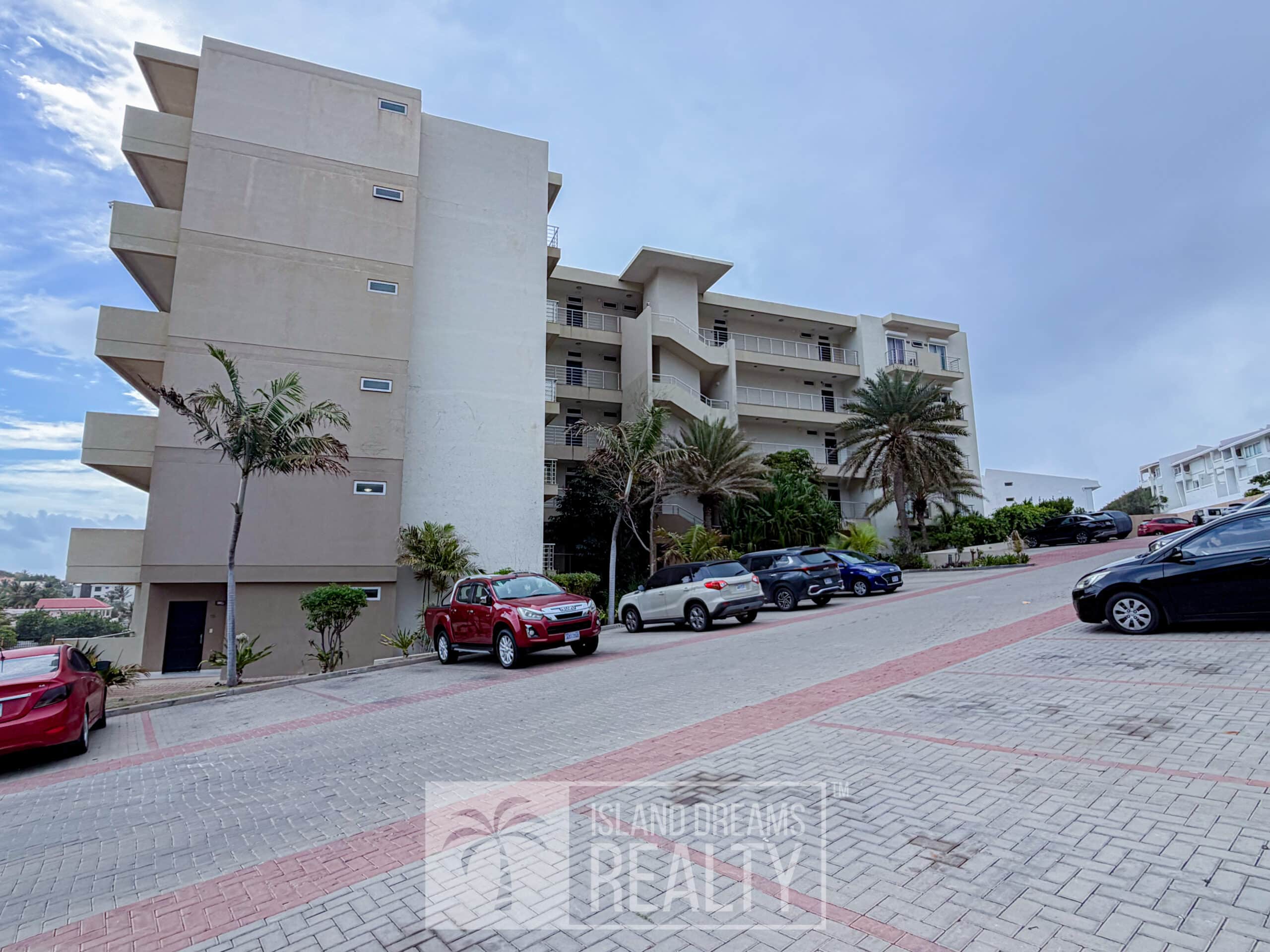
Quick Answer: When you buy a condo in Sint Maarten, you buy a unit inside a managed building or community and pay an association a recurring fee that typically covers common areas, security, amenities and building insurance. The fee only means something once you know what is in it. Before you make an offer, ask for the association’s financial statements and reserve study, its house rules, and its insurance details, and get the rental rules in writing if you plan to rent the unit out.
Table of Contents
- How condo ownership works in Sint Maarten
- What HOA/association fees usually cover
- Reserve funds, insurance & hurricane assessments
- Rental rules: short-term vs long-term
- Documents to ask for before you make an offer
- Resale & new-build condos
- Next steps
How condo ownership works in Sint Maarten
Buying a condo in Sint Maarten means buying a unit inside a managed building or community. You own your unit and share the common areas, such as the pool, grounds, gym, security and roof, with the other owners, who together fund their upkeep through an association, commonly called the HOA, and its recurring fees. Cupecoy, Simpson Bay and Maho are among the areas where you will find many of the island’s condo buildings, and many of them are gated complexes.
The purchase itself goes through a civil-law notary, who verifies title, checks for liens and prepares the deed. The practical difference from buying a house is that a big part of what you are buying into is the association: how well it is run, how it is funded and what it allows. For an overview of the market, read our condos for sale in St Maarten buyer’s guide, and browse current listings on our buy page.
Because so much rides on the association, a few basic questions are worth asking early. Who manages the building: a professional management company or a board of owners? How are decisions about repairs and fees made? And how transparent is the association with its numbers? A well-run association is one of the best protections for your investment, and a poorly run one is hard to fix from the outside.
What HOA/association fees usually cover
Association fees pay for the things owners share. Typically that includes:
- Shared amenities, such as the pool and gym.
- Common-area maintenance and landscaping.
- Building insurance, which is typically bundled into the fee.
- Contributions to the reserve fund.
Some associations also include items such as water or a generator, while others bill them separately, so read the fee statement line by line. For most condo owners the association fee is the largest recurring cost line.
It also helps to know what the fee does not cover. Your unit’s interior, your own electricity, your contents insurance and any personal upgrades are generally yours to pay for. Electricity is billed to you directly, and air conditioning is usually the biggest driver of that bill.
We do not quote fee ranges here, because they vary by building and a number means little without knowing what is behind it. Ask for the current budget and what each line covers, and see our cost of owning property in Sint Maarten guide for the wider annual picture.
Reserve funds, insurance & hurricane assessments
Sint Maarten is a hurricane zone, and hurricane season officially runs from June 1 to November 30. That makes three things worth understanding before you buy.
- The reserve fund. This is the association’s savings for major repairs. The key question is whether it has enough capital for post-hurricane repairs and infrastructure maintenance.
- Building insurance. Ask for the insurance certificate, what it covers and what the deductible is. You will usually still want cover for your own contents.
- Special assessments. If damage exceeds what insurance and reserves cover, owners can be asked to contribute. Ask whether the association has ever raised one, and how it was handled.
In older buildings, also check whether hurricane-grade glazing has been installed, whether the roof assembly meets updated standards, and whether the building carries adequate property insurance.
Rental rules: short-term vs long-term
If you plan to rent your unit out, rules can come from more than one place, so check each one: the association’s own house rules, any local requirements for tourist rentals, and how your insurer treats a rented unit. Short-term rentals through Airbnb or VRBO are the area where rules matter most. The question to ask before you offer is simple: are short-term rentals allowed in this building, under what conditions, and is that in writing? Our guide to Airbnb and short-term rental rules in Sint Maarten covers this in more detail.
If rental income is part of your plan, compare buildings rather than just units. Look at the location, the amenities guests or tenants expect, how the building is maintained, and how the association treats renters, because the building’s culture affects your rental results as much as the apartment does.
Long-term renting is a different market. Demand is driven by expat professionals, business owners and international residents, and areas such as Simpson Bay, Maho and Cupecoy are where many buyers focus. If you want to rent short-term but not manage it yourself, we can connect you with reputable short-term rental management companies.
Documents to ask for before you make an offer
Ask for these through your agent before you make an offer, not after:
- Financial statements and the reserve study. The current budget, and how much is set aside for major repairs.
- House rules and bylaws. Rental, pet and renovation rules in particular.
- The building insurance certificate. What it covers and the deductible.
- Recent owners’ meeting minutes. They show what the association is discussing, disputing or planning.
- Special assessment history and planned major works. Roof, glazing, elevators or infrastructure.
- A fee statement for the unit. Confirmation that nothing is outstanding. Your notary can help confirm this.
Watch for warning signs as you collect these documents: an association that is slow or unwilling to share its financials, a reserve fund that nobody can explain, deferred maintenance on the roof or glazing, or a history of disputes among owners. Any of these is a reason to slow down and ask more questions, or to look at a different building.
Your notary will verify title and check for liens, but the association documents are yours to request. Our Sint Maarten property due diligence checklist walks through the full list.
Resale & new-build condos
Neither resale nor new-build is better in the abstract. They come with different questions.
Resale condos give you something to inspect and a track record to read: how the building has aged, how the association has handled repairs, and how its fees have moved. In older buildings, check the glazing, the roof and the insurance. Structural and systems inspections are not universally required, but they are strongly advisable for older builds.
New-build condos come with newer construction, but no track record. Ask what the projected association budget is and who runs the association at first, how the reserve fund will start, what the completion timeline is and what is included, and what the building is designed to withstand in a hurricane. We keep a running overview of what is being built in our guide to new condominium developments in Sint Maarten in 2026.
Price is only one comparison. Two similar units can carry very different ownership costs and risks depending on the building, so weigh the association’s numbers, insurance and rules alongside the asking price, and keep notes on each building so you can compare them fairly.
Next steps
- Decide how you will use the unit: live in it, rent it out, or both.
- Shortlist two or three buildings rather than units, since the association matters as much as the apartment.
- Request the documents above, and get rental rules in writing.
- Work out your full running costs, including insurance and utilities.
When you are ready, browse our current condo listings or contact us and we will help you shortlist buildings and request the paperwork.