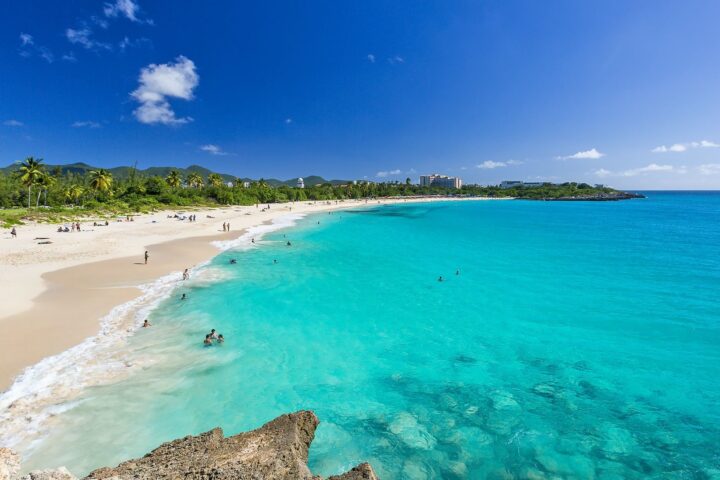

Quick Answer: St Maarten is safe to visit for most people who take ordinary precautions. The U.S. State Department rates Sint Maarten Level 1, “Exercise Normal Precautions”, its lowest advisory level, and Canada advises travellers to “take normal security precautions”. The main risks are opportunistic theft, especially from rental cars and on beaches, road traffic, sea conditions on unguarded beaches, and the Atlantic hurricane season from 1 June to 30 November. Armed robberies and burglaries do occur. No destination is free of risk, and this guide sets out what official sources say, what is general good sense, and what residents and property owners should plan for.
Table of Contents
- What the official travel advisories say
- Crime in St Maarten: what actually happens
- Tourist areas and residential neighborhoods
- Road and transport safety
- Beach and swimming safety
- Health and medical care
- Hurricanes and weather risks
- Emergency numbers on both sides of the island
- St Maarten safety for residents and long-stay visitors
- Property security for owners
- Frequently asked questions
- So, is St Maarten safe?
What the official travel advisories say
Three governments publish regularly reviewed travel advice for Sint Maarten. None of them advises against travel, and the two that use a rating scale place the island at their lowest level.
| Source | Rating for Sint Maarten | Main points |
|---|---|---|
| U.S. Department of State | Level 1: Exercise Normal Precautions (the lowest of four levels) | No specific risk categories flagged. Its country information notes that petty crime and crimes of opportunity are common around beaches and hotels. |
| Government of Canada | Take normal security precautions | Mentions pickpocketing, purse snatching, theft from rental cars and boats, armed robbery and burglaries, with villas affected more than other properties. |
| UK Foreign, Commonwealth & Development Office | No advice against travel | States that there is a risk of petty theft and street crime and that the main tourist areas are generally safe. |
Canada applies the same “normal security precautions” rating to French Saint-Martin. The United States covers the French side under a separate advisory, so check both if you plan to move around the whole island, which almost everyone does.
Advisories are reviewed and reissued from time to time. The U.S. advisory quoted here was last reissued on 19 August 2024 without changes, according to the State Department page at the time of writing. Read the current version before you travel.
Crime in St Maarten: what actually happens
The official sources describe a consistent pattern, and it is the pattern of most busy tourist islands.
- Petty theft is the most common problem. Pickpocketing and bag snatching occur around beaches, hotels and shopping areas. The U.S. State Department calls these “crimes of opportunity”.
- Rental cars are a target. Both the U.S. and Canada warn against leaving anything visible in a parked car. Canada also notes theft from boats.
- Burglary affects holiday accommodation. Canada reports burglaries, with villas affected more than other property types.
- Armed robbery happens, less often. The U.S. notes that armed robberies tend to target businesses holding large amounts of cash. Canada’s advice notes that tourists have also been targeted, particularly at night.
- The island is a transit point for drugs. The UK notes that violent drug-related crime rarely involves tourists, and that penalties for possession are severe. Firearms, ammunition and cannabis products, including CBD, are illegal to bring into Sint Maarten.
What about St Maarten crime statistics?
Reliable, current, comparable crime statistics for Sint Maarten are hard to come by. The Police Force of Sint Maarten (KPSM) reports on its work, but there is no regularly updated public dataset that allows a fair comparison with other islands, and the Dutch and French sides are policed and counted separately. The “crime index” figures that circulate online generally come from user surveys, not police records. We have not quoted a crime rate in this article because we could not verify one against a current official source.
Precautions that cover most of the risk
- Leave nothing in a parked car, including the boot, and do not leave bags unattended on the beach.
- Use the safe in your room or rental for passports, spare cards and cash.
- Withdraw cash in daylight, and carry only what you need.
- Stay on lit, busy streets at night and avoid isolated beaches and roads after dark.
- Keep doors and sliding windows locked at night and when you go out, including in a villa.
- If you are robbed, do not resist. Hand over what is asked for and report it to the police.
Tourist areas and residential neighborhoods
None of the three advisories names a no-go neighborhood on the Dutch side. The more useful distinction is between places built around visitors and places where people live, because the risks and the rhythms differ. The descriptions below are general observations, not official assessments.
Visitor hubs
- Philipsburg. Busy by day with cruise passengers and shoppers along Front Street and the boardwalk, and much quieter once the ships leave and the shops close. Crowds are where pickpockets work, so keep bags closed. See our Philipsburg neighborhood page for how the town is laid out.
- Simpson Bay and Maho. The island’s main restaurant and nightlife areas, active late into the evening. The usual night-out rules apply: watch your drink, use a licensed taxi and do not walk back along unlit stretches of road. Our pages on Simpson Bay and Maho describe each area.
- Marigot and Grand Case (French side). Busy at market and meal times and quiet afterwards. As in Philipsburg, keep to the main, lit streets in the evening.
Residential areas
Residential neighborhoods are calmer and see far fewer visitors. What varies between them is street lighting, traffic, how close the neighbours are and whether access is controlled.
- Gated communities. Developments such as Indigo Bay and Pelican Key offer controlled access and shared security arrangements. Our guide to gated communities in Sint Maarten compares what each one provides.
- Established residential districts. Areas such as Cay Hill and Cole Bay are lived in year-round, close to shops, schools and services, with neighbours who know the street.
- Hillside villa areas. Homes above Dawn Beach, Oyster Pond and Guana Bay are more private and more spread out. Privacy is the attraction, and it also means a property benefits from its own security measures.
If quiet and privacy are priorities, our street-by-street guide to the quietest residential neighborhoods goes into more detail, and the map of SXM areas shows where each one sits.
Road and transport safety
For most visitors and residents, traffic is a more likely source of harm than crime. The official advisories describe main roads as narrow and dimly lit, with some drivers ignoring traffic laws and speed limits.
- Driving side. Traffic drives on the right on both sides of the island. Visitors can drive on a valid U.S. licence; if yours was issued elsewhere, check with your rental company.
- Local rules. Turning right on a red light is not allowed. Drink-driving carries fines, loss of licence and possible imprisonment.
- Congestion. Traffic is heaviest from December to April, and around Simpson Bay and Cole Bay at commuting times. Allow extra time for the airport.
- Road surfaces. Secondary and hillside roads can be steep, potholed and slippery after rain. A small car handles the main roads; some villa driveways need more clearance.
- Scooters and motorbikes. Riders often pass on both sides. Check mirrors before turning.
- Taxis. Use registered taxis. They are unmetered, so confirm the fare before you set off.
- Buses. Privately run minibuses cover the main routes on both sides and are inexpensive. There are no ride-hailing apps.
Beach and swimming safety
The sea is the island’s main attraction and deserves the most respect. Most beaches have no lifeguards and no flag warning system, and Canada’s advisory notes that rip currents are common.
- Pick the coast to suit your ability. Beaches on the Caribbean side are usually calmer. Atlantic-facing beaches on the east coast, including Guana Bay and Dawn Beach, have more surf and stronger currents.
- Do not swim alone or after drinking. The U.S. State Department advises staying out of the water above waist level if you have consumed alcohol.
- Stay clear of the jet blast at Maho Beach. Standing behind departing aircraft at the fence beside the runway, next to Beacon Hill, can cause serious injury or death, in the State Department’s words. A visitor was killed there in 2017. Watch the landings from the beach or the bars, not from the fence.
- Use established operators for diving, boat trips and water sports, and check that life jackets are on board. There is no decompression chamber on the Dutch side.
- Mind the sun and the manchineel tree. The sun is strong all year. The manchineel, which grows near some beaches, has sap and fruit that cause burns; do not shelter under it or touch it.
- Leave valuables behind. Take only what you are happy to leave on a towel.
Health and medical care
Sint Maarten has one hospital, St. Maarten Medical Center in Cay Hill, with a 24-hour emergency department. On the French side, Hôpital Louis-Constant Fleming is in the Concordia district of Marigot. Both handle emergencies and routine care, but specialist services are limited, and serious cases are sometimes transferred off the island.
- Insurance. Carry travel or health insurance that includes medical evacuation. Hospitals may expect payment or proof of cover.
- Mosquitoes. Dengue, chikungunya and Zika are present in the region. Use repellent, particularly in the wetter months.
- Water. Mains water is desalinated. The U.S. State Department advises visitors to drink bottled water. If you are staying in a house supplied by a cistern, ask how the water is filtered and treated.
- Medication. Bring enough of any prescription medicine for your stay, in its original packaging.
For a fuller picture of doctors, specialists and insurance, see our guide to healthcare in Sint Maarten for retirees.
Hurricanes and weather risks
The largest natural hazard is the Atlantic hurricane season, which runs from 1 June to 30 November and peaks between mid-August and mid-October. In most years the island is not struck, but it has been hit hard before, most recently by Hurricane Irma on 6 September 2017. Heavy rain from weaker systems can also cause flooding and close roads.
- Visitors: if you travel between August and October, book flexible arrangements, carry insurance that covers weather disruption and follow instructions from your accommodation and the authorities.
- Residents and owners: prepare before June. That means a household plan, stored water and supplies, checked shutters and roof fixings, and up-to-date insurance.
- Everyone: rely on official sources. The Meteorological Department St. Maarten issues local warnings and the U.S. National Hurricane Center tracks every system.
Homes built or rebuilt since 2017 follow stricter standards, which we explain in our guide to post-Irma building codes. Buyers weighing the risk can also read our piece on purchasing during hurricane season.
Emergency numbers on both sides of the island
The Dutch and French sides have separate emergency services and separate numbers. Save both sets, because you can cross the border without noticing.
| Service | Dutch side (Sint Maarten) | French side (Saint-Martin) |
|---|---|---|
| Police | 911 | 17 (Gendarmerie) |
| Ambulance / medical emergency | 912 | 15 (SAMU) |
| Fire | 919 | 18 |
| Hospital | 910 (St. Maarten Medical Center, Cay Hill) | Hôpital Louis-Constant Fleming, Concordia, Marigot |
| Coast Guard / sea rescue | 913 | SNSM sea rescue |
| General emergency | 911 | 112 (European emergency number) |
| Country dialling code | +1 721 | +590 |
These numbers are drawn from the two tourism offices and local emergency listings. One U.S. government page lists a different fire number for the Dutch side, so confirm the list with your accommodation or property manager when you arrive. U.S. citizens are assisted by the U.S. Consulate General in Curaçao; there is no U.S. consulate on the island.
St Maarten safety for residents and long-stay visitors
Living here is different from visiting. Residents are not carrying a week’s cash and a camera, they know which roads flood and which junctions are awkward, and they are known to their neighbours. Day-to-day safety becomes a matter of routine more than vigilance.
- Choose the area for how you live. Proximity to work, schools and shops shortens time on the road, which is where most risk sits. Our community-by-community guide to the best neighborhoods compares the main options, and families can start with our guide to schools in Sint Maarten.
- Get to know the street. In most residential areas, neighbours notice unfamiliar cars and people. That is worth more than any gadget.
- Sort out healthcare early. Register with a doctor and check what your insurance covers on and off the island.
- Keep a hurricane kit and a plan from your first season.
- Keep documents in order. Residency papers, insurance and vehicle documents are covered in our relocation checklist.
Property security for owners
For owners, and especially for those who are away for part of the year, safety is mostly about how the property is set up and who looks after it. Canada’s observation that villas see more burglaries than other property types is a useful prompt: a detached home needs more thought than an apartment in a managed building.
- Access. Solid doors, quality locks, and secured sliding doors and windows come first. Hurricane shutters double as a physical barrier when a home is closed up.
- Lighting and visibility. Exterior lighting on timers or sensors, and gardens trimmed so that entrances can be seen.
- Alarm and cameras. A monitored alarm and cameras you can check remotely are common in villas. Ask who responds when the alarm goes off.
- A managed presence. An empty house should not look empty. Regular visits by a property manager, a gardener and a pool service keep it lived-in and catch problems early. See what to expect from property management in Sint Maarten.
- Building type. Condominiums and gated communities share the cost of security and suit owners who want to lock up and leave.
- Insurance. Check that contents and theft are covered while the home is unoccupied or let to guests, and what security conditions the policy sets. We cover premiums in our guide to the cost of owning property in Sint Maarten.
- Rental guests. Give guests clear instructions on locking up, the safe and the alarm. An unlocked door is the easiest opportunity to remove.
- Before you buy. Ask about the security history of the property and the area as part of your checks. Our due-diligence checklist lists the other questions to ask.
Frequently asked questions
Is St Maarten safe for tourists?
Yes, for most tourists who take normal precautions. The United States rates Sint Maarten at Level 1, its lowest advisory level, and Canada and the UK do not advise against travel. The most common problems for tourists are petty theft and theft from rental cars.
Is the Dutch side or the French side of St Martin safer?
No official source ranks one side above the other. Canada gives both sides the same rating, “take normal security precautions”. The same habits apply on both: do not leave valuables in cars, keep to busy, lit areas at night and take care in the sea.
Is St Maarten safe at night?
The main dining and nightlife areas, such as Simpson Bay and Maho, are busy in the evening. The official advice is to avoid isolated areas, beaches and unlit roads after dark, to travel in a group where possible and to use a registered taxi.
Is St Maarten safe for solo female travellers?
Many women travel to St Maarten alone without problems, and the official advisories contain no specific warning for solo female travellers. The standard precautions matter more when you are on your own: choose well-reviewed accommodation, do not walk alone on beaches or quiet roads after dark, watch your drink and arrange transport back in advance.
Is it safe to drive in St Maarten?
Yes, with care. Traffic drives on the right, and main roads are narrow, busy and poorly lit at night. Drive defensively, expect scooters to overtake on either side, do not turn right on red and never leave belongings in a parked car.
Is St Maarten safe to live in?
Thousands of expatriates and retirees live on the island year-round. Residents face the same risks as visitors, mainly property crime and traffic, and manage them through their choice of neighborhood, sensible home security and local knowledge. Many choose gated communities or established residential areas.
Is St Maarten safe from hurricanes?
No. The island lies in the Atlantic hurricane belt, and the season runs from 1 June to 30 November. Direct hits are infrequent, but Hurricane Irma in 2017 caused severe damage. Building standards have been tightened since, and preparation and insurance are part of owning or renting a home here.
Can you drink the tap water in St Maarten?
Mains water on the island is produced by desalination. The U.S. State Department advises visitors to drink bottled water. In a house supplied by a rainwater cistern, ask how the water is filtered before drinking it.
What is the emergency number in St Maarten?
On the Dutch side, dial 911 for police, 912 for an ambulance and 919 for the fire service. On the French side, dial 17 for police, 15 for medical emergencies and 18 for the fire service, or 112 for any emergency.
So, is St Maarten safe?
Is Sint Maarten safe? For the great majority of people who visit, live or own property here, yes, on the same terms as any well-visited island: look after your belongings, drive carefully, respect the sea and prepare for hurricane season. None of the three governments that publish advice for the island warns against travelling here. The risks that do exist are known, specific and largely manageable, and they are different for a visitor on a beach, a family in a residential street and an owner whose villa is empty for half the year.
If you are thinking about a longer stay or a purchase and want to understand how a particular area feels day to day, our neighborhood pages are a good place to start, and you can contact our team for a local view.