
A building permit in Sint Maarten today means something it didn’t in 2016. Island Dreams Realty represents buyers evaluating both new construction and older resale properties across the island, and the construction era of a home is now one of the first questions worth asking — not the last.
This guide walks through what actually changed in Sint Maarten’s building codes after Hurricane Irma, what Building Code BC0 requires today, and why that history now shows up directly in resale value, insurance premiums, and appraisal outcomes.
Table of Contents
- Why Building Codes Matter for Buyers, Not Just Builders
- Hurricane Irma and the Case for Stronger Codes
- The Legal Framework: The Building and Housing Ordinance and VROMI
- Building Code BC0: What Actually Changed After 2018
- Build Back Better: The Trust Fund Behind the Rebuild
- What This Means for New Construction Specifically
- What This Means for Resale Value
- Retrofit Options for Older Homes
- How This Affects Financing
- How Sint Maarten’s Approach Compares to Other Hurricane-Prone Markets
- The Role of Independent Verification
- How Land Use Planning Connects to Building Codes
- Older vs. Newer Construction: A Practical Comparison
- Insurance Implications of Building Code Compliance
- The Cost of Non-Compliance
- Questions to Ask About a Property’s Code Compliance
- Frequently Asked Questions
Quick Answer: How Did Sint Maarten’s Building Codes Change After Irma?
| After Hurricane Irma struck as a Category 5 storm in September 2017, affecting roughly 90% of Sint Maarten’s infrastructure, the government introduced Building Code BC0, which came into force around 2021 and applies Eurocode methodology (NEN-EN 1990 and related standards) to higher-risk building classes. Every new construction and major renovation still requires a VROMI building permit under the Building and Housing Ordinance, and post-2017 construction built to these standards has materially outperformed older inventory in both storm resilience and resale value. |
Why Building Codes Matter for Buyers, Not Just Builders
Building codes tend to read as a contractor’s problem — permits, inspections, paperwork. On Sint Maarten specifically, they’ve become a buyer’s problem too. A property’s construction era now directly affects three things a buyer cares about: whether it’s genuinely safer to live in during hurricane season, what it will cost to insure, and what it will be worth when you sell it. Understanding what actually changed, and when, is the difference between a listing description that says “hurricane resistant” and knowing what that claim is actually backed by.
Hurricane Irma and the Case for Stronger Codes
Hurricane Irma made landfall on Sint Maarten on September 6, 2017, as a Category 5 storm, and affected an estimated 90% of the island’s infrastructure. The World Bank later estimated total damage and loss at roughly US$1.38 billion. It remains the reference event for every building code conversation on the island since.
A post-storm research mission by the EU-funded PEARL project found that around 80% of the island’s residential buildings had concrete walls, but only about 70% had zinc roofs — and it was overwhelmingly the roofs, along with debris from poorly built structures nearby, that caused the most damage, even to homes with genuinely strong concrete walls. That finding mattered: it meant the weak point in Sint Maarten’s pre-Irma housing stock wasn’t primarily wall construction, it was roofing, connections, and the absence of consistent inspection requirements to catch it.
The Legal Framework: The Building and Housing Ordinance and VROMI
Construction on Sint Maarten is governed by the Building and Housing Ordinance (Bouw- en woonruimteverordening), the island’s core construction law. Under it, no construction work — new build, extension, or modification of an existing structure — can proceed without a building permit issued by the Ministry of VROMI (Public Housing, Spatial Planning, Environment, and Infrastructure), specifically its Department of Permits.
Applications must be submitted in writing, and the government is required to decide on a permit within one month of filing, though it can request additional information from the applicant along the way. The Ordinance also sets height limitations on construction, based partly on internal Island Council guidelines that have historically been a source of some ambiguity and, at times, legal dispute — worth flagging to your architect early if you’re planning anything beyond a standard single-family build.
Building Code BC0: What Actually Changed After 2018
Following recommendations from structural engineers in meetings held in May 2018 — in the direct aftermath of Irma — Sint Maarten introduced Building Code BC0, a new National Building Decree that came into force around 2021. Its central change was adopting Eurocode methodology, referenced in the code as NEN-EN 1990 and related standards, for buildings classified in the higher-risk Consequence Classes: those where structural failure would carry the greatest risk to life and economic damage.
“Failure” under BC0 is defined broadly — not just a full collapse, but blown-off roofs, damaged facades and window frames, or any deformation that renders a building unusable. The code also introduced a role for an independent third party in verifying structural design and calculations for these higher-risk buildings, a layer of accountability the pre-Irma system generally lacked. Design loading in the code is also grounded in real local data — for example, drainage and rainfall provisions reference the Meteorological Service of Sint Maarten’s recorded maximum of 258mm of rainfall in 24 hours.
Build Back Better: The Trust Fund Behind the Rebuild
The updated code didn’t happen in isolation. In April 2018, the Netherlands and the World Bank signed an agreement channeling €470 million (about US$580 million) through the Sint Maarten Recovery, Reconstruction and Resilience Trust Fund, explicitly built around the UN’s “build back better” principle — reducing future vulnerability rather than simply restoring what existed before.
One of the Trust Fund’s higher-visibility projects has been the underground placement of previously overhead electricity and water lines on selected residential streets, run by N.V. GEBE with contractor support, which also lays empty conduits for future fiber-optic cable expansion. The government also secured multi-year catastrophe insurance coverage against hurricanes, excessive rainfall, and earthquakes through the Caribbean Catastrophe Risk Insurance Facility (CCRIF SPC) — a financial resilience layer that sits alongside the physical construction standards.
What This Means for New Construction Specifically
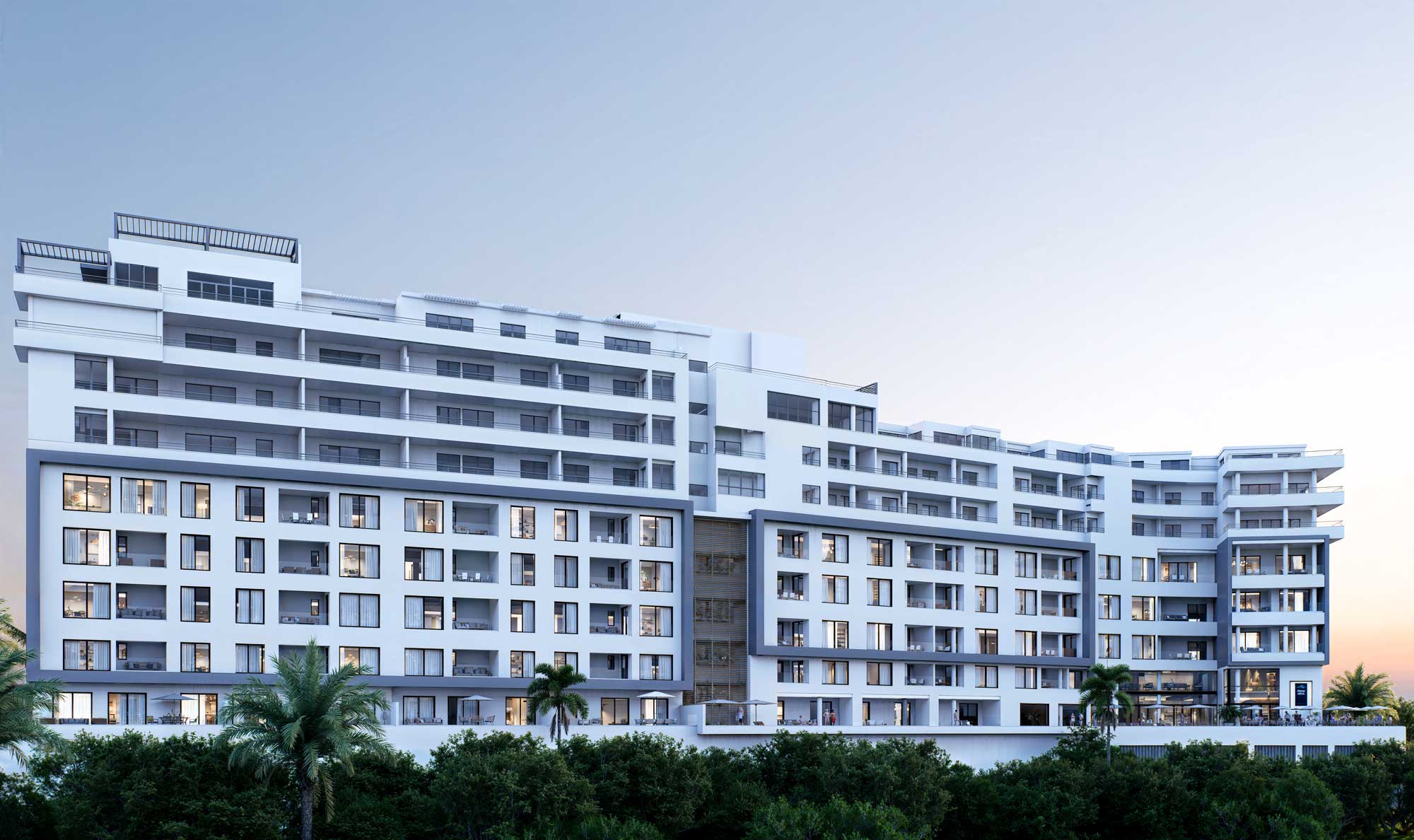
For a buyer looking at new construction today, BC0 compliance should show up as specific, verifiable features rather than a marketing phrase. Country Gardens at Betty’s Estate, one of the island’s current new construction developments, illustrates what this looks like in practice: solid poured concrete structures and hurricane force impact windows built in from the start, rather than retrofitted onto an older frame.
That’s a meaningfully different claim than “storm resistant” on an older listing. Ask specifically whether a new build’s structural design went through the independent third-party verification BC0 requires for higher Consequence Classes, and ask to see the actual VROMI-issued permit rather than taking a builder’s word for compliance.
What This Means for Resale Value
According to our own ROI guide, post-2017 construction built to hurricane-resistant standards — impact glass, reinforced concrete — has materially outperformed older inventory, both in resilience and in resale value. That’s a real, structural reason construction era now functions almost like a distinct pricing category on the island, separate from neighborhood or square footage.
The same guide notes that the market has shown strong shock-recovery behavior overall, with transaction volume and prices typically returning to trend within 18–24 months of a major disruption — but that recovery has not been evenly distributed. Newer, code-compliant construction has recovered faster and more completely than older stock, which is exactly the kind of gap a buyer or seller should factor into pricing conversations rather than treating all inventory as equivalent.
This also shows up directly in the appraisal process. Appraisers determining property valuation on Sint Maarten weigh recent comparable sales and property-specific characteristics — and construction era, permit history, and documented code compliance are now squarely part of those property-specific characteristics, not a footnote.
Retrofit Options for Older Homes
Not every buyer is looking at new construction, and an older home isn’t automatically a bad purchase — but it usually means budgeting for targeted retrofits rather than assuming the structure already meets current standards. The most common and highest-value retrofits on Sint Maarten specifically address the exact weak points Irma exposed: replacing zinc roofing with a more storm-resistant system, reinforcing roof-to-wall connections, and installing impact-rated windows and doors in place of older glazing.
Any of these retrofits still requires a permit from VROMI’s Department of Permits under the Building and Housing Ordinance, even though you’re modifying an existing structure rather than building new — skipping that step doesn’t just risk a fine, it also means the work won’t show up as documented, permitted compliance history at resale or for insurance purposes, which defeats much of the point of doing the retrofit in the first place.
How This Affects Financing
Lenders on Sint Maarten increasingly factor construction era and documented code compliance into both the appraisal and the underwriting decision itself, not just the insurance quote. A property with clear VROMI permit records and, where applicable, independent structural verification generally moves through financing more smoothly than one where that documentation is missing or incomplete — worth requesting from a seller as part of your due diligence rather than assuming it exists.
How Sint Maarten’s Approach Compares to Other Hurricane-Prone Markets
Sint Maarten’s post-Irma path mirrors a pattern seen across other hurricane-exposed markets: Florida significantly strengthened its building code after Hurricane Andrew in 1992, and updated it again after 2017’s storm season, with the state’s current standards built around impact-rated glazing, reinforced roof-to-wall connections, and elevated construction in flood zones. Sint Maarten’s BC0 update follows a similar arc — a major storm exposing systemic gaps, followed by a methodical, Eurocode-based rewrite rather than piecemeal patching.
The practical difference for a buyer is enforcement maturity. Florida’s code has had over three decades to work through inspection regimes, insurer adoption, and buyer awareness. Sint Maarten’s BC0 is comparatively young, having come into force around 2021, which means documentation and inspection history for any given property is worth verifying directly rather than assumed to be as thorough as a buyer might expect from a longer-established code regime.
The Role of Independent Verification
One of BC0’s more consequential, if less publicized, changes is the introduction of a required independent third party for structural design verification on higher-risk Consequence Class buildings — meaning the same engineer or firm designing a building generally cannot be the sole party confirming that design meets code. This separation of design and verification is a meaningful accountability upgrade from the pre-Irma system, where enforcement and inspection were, per the PEARL research team’s findings, inconsistent at best.
For a buyer, this means a genuinely code-compliant new build should have a paper trail: the original structural design, plus a separate, independently authored verification report. If a builder or seller can’t produce both documents, that’s worth treating as a real gap rather than a paperwork technicality.
How Land Use Planning Connects to Building Codes
Building codes govern how a structure is built; land use and zoning govern where and how densely it can be built in the first place, and the two increasingly interact on Sint Maarten’s post-Irma landscape. The height limitations set under the Building and Housing Ordinance, mentioned earlier, sit alongside broader spatial planning considerations managed by VROMI — meaning a fully code-compliant structural design can still require additional review if it pushes against zoning density or height guidelines for its specific area.
This is particularly relevant for buyers eyeing larger redevelopment or subdivision projects rather than a single home purchase — worth engaging an architect or planning consultant familiar with both the structural code and the zoning side early, rather than assuming code compliance alone clears every regulatory hurdle.
Older vs. Newer Construction: A Practical Comparison
| Factor | Pre-Irma / Older Construction | Post-BC0 Construction |
|---|---|---|
| Roof construction | Often zinc, a documented weak point in Irma | Reinforced roof-to-wall connections increasingly standard |
| Structural verification | Limited or no independent inspection requirement | Independent third-party verification for higher risk classes |
| Design standard | Pre-Eurocode, inconsistent enforcement | Eurocode methodology (NEN-EN 1990) for higher Consequence Classes |
| Resale performance | Slower, less complete post-disruption recovery per ROI data | Materially outperformed older inventory per ROI data |
| Insurance positioning | Often higher premiums, more scrutiny | Better positioned for favorable underwriting |
Insurance Implications of Building Code Compliance
Insurers on Sint Maarten increasingly price hurricane risk based on documented construction quality rather than age alone, which means two homes of similar size and location can carry meaningfully different premiums if one can demonstrate BC0-era construction and the other cannot. Renovation records, permit history, and any structural engineering reports are worth keeping and passing on at resale specifically because they can materially affect a buyer’s insurance quote, not just the sale price.
This is also where the CCRIF SPC catastrophe insurance layer at the government level and an individual homeowner’s private policy operate differently: the government-level coverage protects the country’s fiscal capacity to respond after a major storm, while your private policy protects your specific asset — and its pricing responds directly to the construction-quality questions this guide has walked through.
The Cost of Non-Compliance
Building without a permit, or completing work that deviates materially from an approved permit, carries real consequences beyond a hypothetical fine. Unpermitted work generally cannot be credited by an appraiser, can complicate or delay a notarial transfer at resale, and in some cases can affect whether an insurer will pay out a claim if damage occurs to the unpermitted portion of a structure specifically.
For buyers, this means a seller’s verbal assurance that “everything was done properly” is worth substantially less than the actual VROMI permit record. Requesting and reviewing that record — or having your attorney do so as part of due diligence — is a small step that protects against a much larger problem discovered after closing.
Questions to Ask About a Property’s Code Compliance
Whether you’re evaluating new construction or an older resale, these are the specific questions worth asking before you make an offer — not after inspection surfaces a problem you could have priced in from the start:
- What is the construction year, and was the building permit issued before or after Building Code BC0 came into force around 2021?
- For new construction, was the structural design verified by an independent third party as required for higher-risk Consequence Classes?
- What roof type and roof-to-wall connection method was used, given that roofing was the primary failure point in Irma?
- Are there permit records or engineering reports available from VROMI’s Department of Permits to confirm compliance history?
- Has the property been re-roofed, retrofitted with impact windows, or otherwise upgraded since original construction, and is that work documented and permitted?
Frequently Asked Questions
1. When did Hurricane Irma hit Sint Maarten?
September 6, 2017, as a Category 5 storm that affected an estimated 90% of the island’s infrastructure.
2. What is Building Code BC0?
Sint Maarten’s National Building Decree, which came into force around 2021 and applies Eurocode methodology (NEN-EN 1990) to higher-risk building classes, following structural engineering recommendations made in May 2018.
3. Do I need a permit to renovate an existing home in Sint Maarten?
Yes. The Building and Housing Ordinance requires a VROMI-issued building permit for new construction as well as extensions or modifications to existing buildings.
4. How long does it take to get a building permit in Sint Maarten?
The government is required to decide on a permit application within one month of filing, though it can request additional information that extends the timeline.
5. Does construction era really affect resale value on Sint Maarten?
Yes. Post-2017 construction built to hurricane-resistant standards has materially outperformed older inventory in resale value, according to our own market data.
6. What was the main structural weakness in homes damaged by Irma?
Roofing was the primary issue — around 70% of residential buildings had zinc roofs, and it was largely roof failures and resulting debris that caused damage, even to homes with strong concrete walls.
7. Does building code compliance affect insurance premiums?
Generally yes. Insurers increasingly price hurricane risk based on documented construction quality, so BC0-era construction is often better positioned for favorable premiums than older, unverified stock.
8. What is the Sint Maarten Recovery, Reconstruction and Resilience Trust Fund?
A fund created through a 2018 agreement between the Netherlands and the World Bank, channeling €470 million (about US$580 million) toward rebuilding Sint Maarten’s infrastructure to a more resilient standard after Hurricane Irma.
9. Is Country Gardens at Betty’s Estate built to current hurricane standards?
Yes. It’s built with solid poured concrete structures and hurricane force impact windows as part of its original construction.
10. What retrofits matter most for an older Sint Maarten home?
Replacing zinc roofing with a more storm-resistant system, reinforcing roof-to-wall connections, and installing impact-rated windows and doors address the specific weak points Hurricane Irma exposed.
11. Do retrofits on an existing home still require a VROMI permit?
Yes. The Building and Housing Ordinance requires a permit for extensions or modifications to existing structures, not just new construction.
12. How does Sint Maarten’s building code compare to Florida’s?
Both followed a similar path — a major hurricane exposing code gaps, followed by a significant rewrite — but Florida’s code has had over three decades to mature through enforcement and insurer adoption, while Sint Maarten’s BC0 only came into force around 2021.
13. What is independent structural verification under BC0?
A requirement that a party separate from the original design engineer verify the structural design meets code for higher-risk building classes — an accountability layer the pre-Irma system generally lacked.
14. Does zoning affect building code compliance in Sint Maarten?
They’re related but separate — a structurally code-compliant design can still require additional review if it conflicts with height limitations or zoning density guidelines for its specific area.
15. What happens if a property has unpermitted construction work?
It generally can’t be credited by an appraiser, can complicate a notarial transfer at resale, and may affect whether an insurer pays a claim tied to the unpermitted portion of the structure.
16. Who do I contact about buying new construction or a code-compliant resale in Sint Maarten?
Sacha van den Bosch, broker at Island Dreams Realty.
About Island Dreams Realty
Island Dreams Realty is a Sint Maarten-based brokerage with leadership lineage dating back to 1979, led by Broker Sacha van den Bosch, President and Founding Member of the St. Maarten Real Estate Alliance, and affiliated with Century 21 St. Maarten. The team represents inventory across Sint Maarten, Saint Martin, and a further eleven Caribbean markets.
Considering new construction or a resale property? Get construction history and code compliance verified before you commit. Free buyer consultation — no obligation.
Talk to Sacha van den Bosch | idr.sx